Showing posts with label Canada Goose Nursery. Show all posts

Sunday, 13 May 2018

Charming Chicks

Over the last few weeks chicks have started to hatch and fledge in large numbers so today's post features lots of cute baby birds.

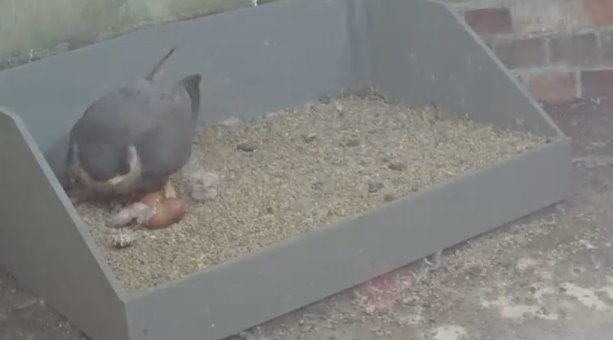
The Bournemouth peregrine falcons laid three eggs in the end and all three successfully hatched!


Getting clear shots of the three chicks is proving quite tricky at the moment as the adult is almost always brooding them. They appear to be doing really well with the adults bringing in regular and sizeable meals. These are an experienced pair who who have excellent hunting weather since the eggs hatched so I would expect these chicks to grow up healthily. 

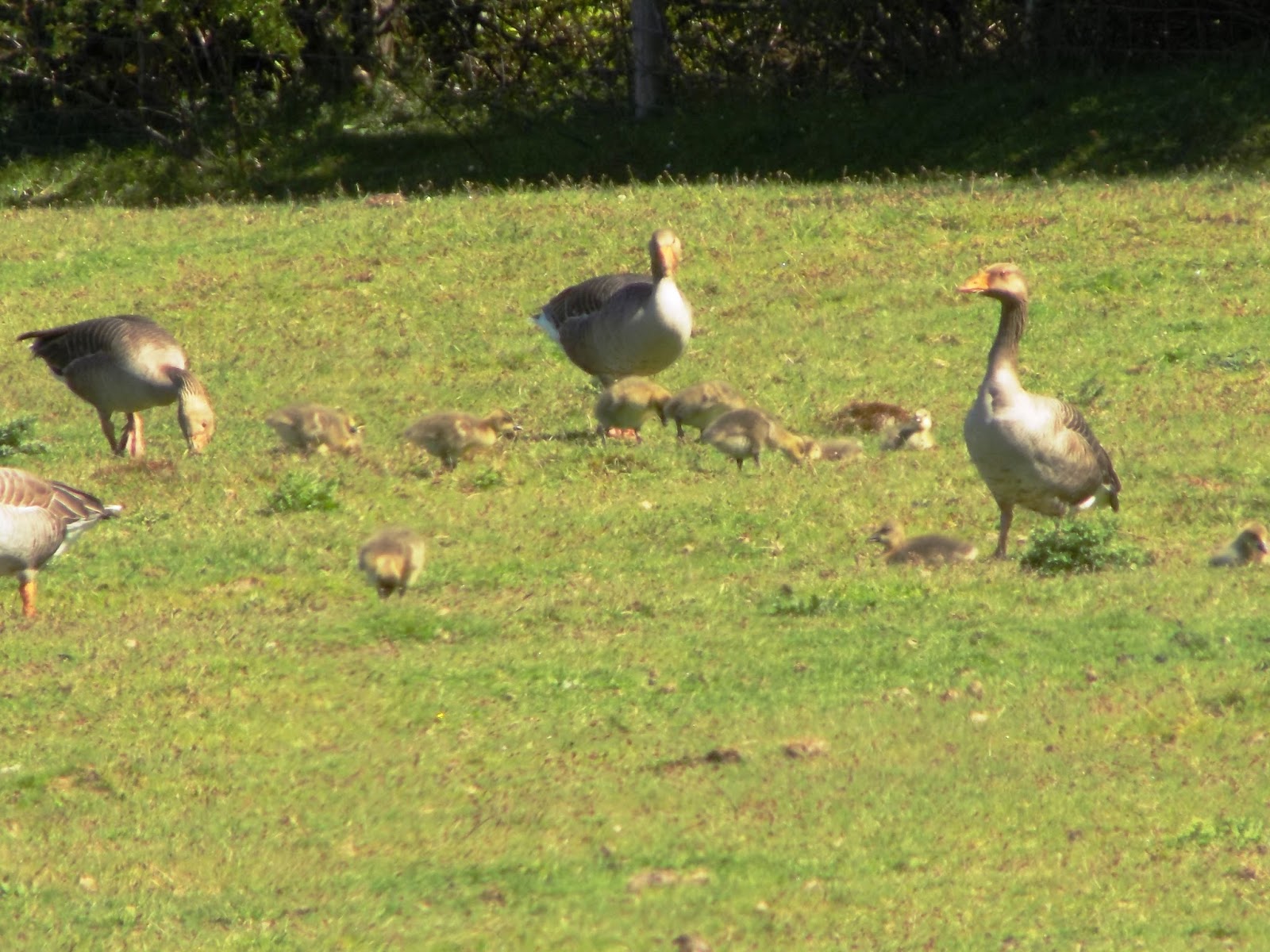
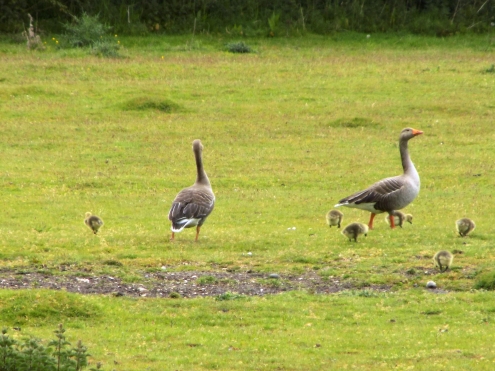
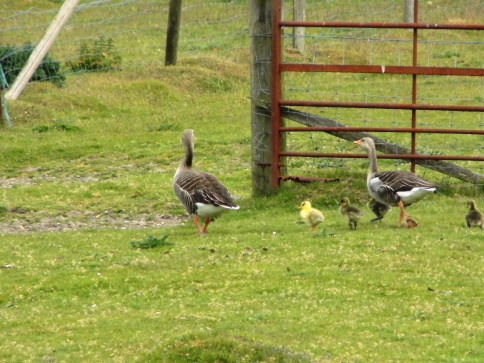
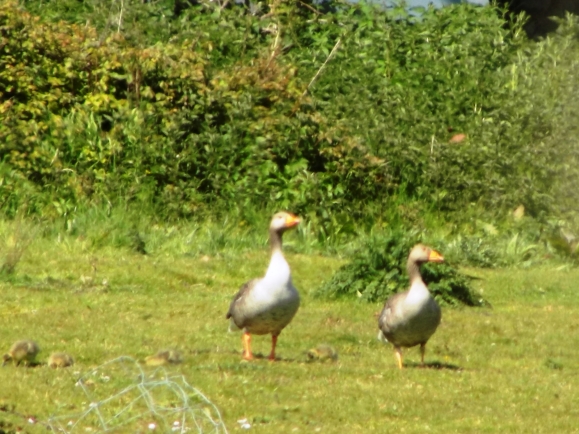
Meanwhile the gosling nursery field has suddenly become full of goslings. The first I spotted were the greylag goslings. 


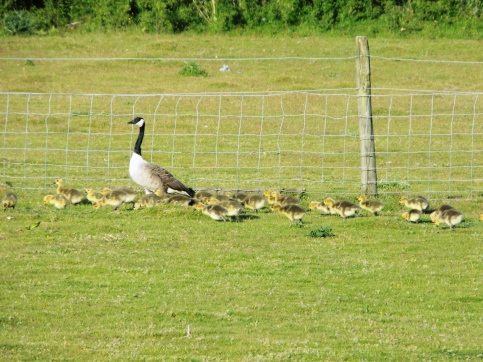
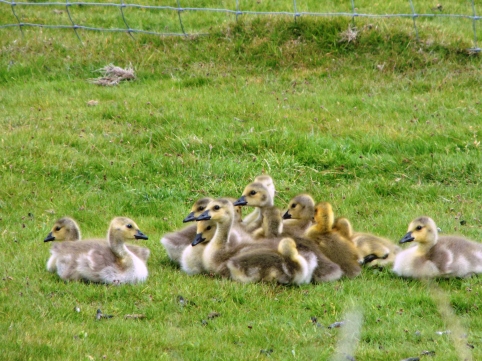
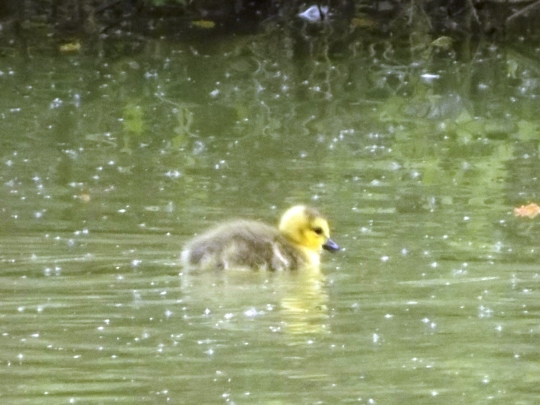
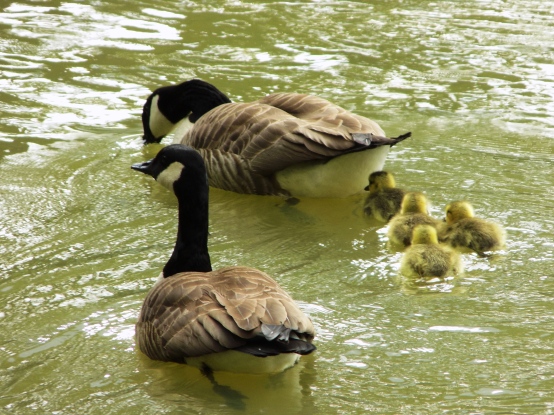
Within two days they were joined by around thirty canada geese goslings. 


Canada goslings are fairly well developed when they hatch with their eyes open and leave the nest within 1-2 days1. In many places they form these 'gang broods' where several broods come together- I think there must be at least three here. The advantages of this tactic are clear- a predator would likely wipe out one brood with just two adults to protect it. Here though any predator would face a whole load of adults and even if it caught some goslings the overall proportion would still be lower. It's definitely a case of safety in numbers.

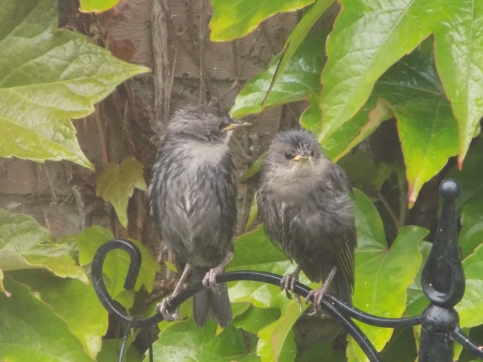
Very close to my house last weekend I found this very young looking fledgling. 


It's difficult to confidently identify the species but I suspect that this is probably a starling. It still looks very much like a chick with it's downy feathers and that yellow mouth called a 'gape'2. The gape acts as a target for adult birds who feel an irresistible compulsion to put food in it. Gradually the gape flange, the outer parts of the mouth, will shrink and turn dull as the bird grows older. 

This individual cannot have fledged very long before I found it and was sat in the middle of a footpath. It was extremely vulnerable there so I gently ushered it into the bushes where it would be better protected from predators, especially the local cat population, and be further away from the road. 

Another recent bird sighting was this adult grey wagtail


As you can see this wagtail has a beak stuffed full of what appear to be caterpillars. The fact it is holding them rather than eating them suggests that it is about to take them to it's young in a nearby nest. According to the information I've found grey wagtails are supposed to eat aquatic creatures rather than caterpillars but the latter may be easier to catch and I don't suppose the chicks are too fussy. 

Grey wagtails nest alongside a fast moving river or stream with a clutch size of between 3-6 eggs. 

Finally for today, here's one of the many butterflies which has emerge in recent weeks. 


This is a speckled wood and it seems to be common for them to lose parts of their wing. The spots look like eyes to predators, mainly birds, which then aim for the wing margin3. They may end up damaging the wing but butterflies can manage with a fair bit of damage and their body remains completely intact.

That's all for today, see you soon.

Sunday, 23 July 2017

Fabulous Fawns

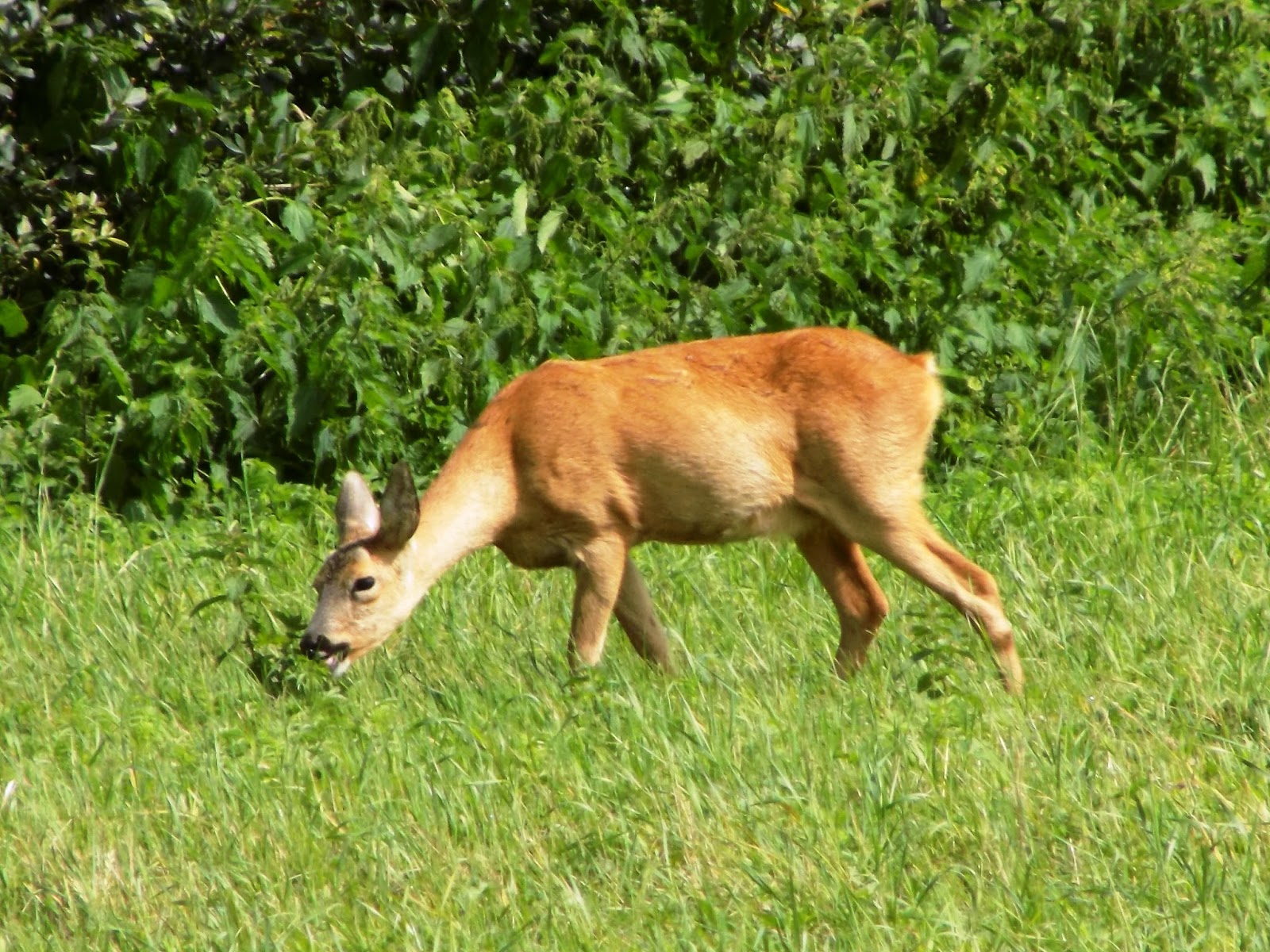
It's been a couple of months since I last saw any of the Avon roe deer herd. Yesterday I got a really clear view of one of the does.


She looks really healthy which is nice to see. What was even nicer to see were two fawns that she had alongside her. 


Most roe deer fawns are born in June so it's likely these fawns are somewhere between four-six weeks old. Roe deer usually have two fawns, one of each gender, which again probably fits here. The fawns seemed fairly confident, happy to allow their mother to walk a little way away from them. They also seem to be quick learners. I watched as the doe approached a tree and reached up to eat the leaves. One of the fawns followed her and did exactly the same thing. 


It was a delight to be able to watch these young deer for a few minutes and I hope I will see them again. 

There are still a few canada geese over on the nursery field but now all the goslings are close to looking like adults. 


There's a family of swans whose cygnets are rapidly growing up on the Avon too. 


Most of my other sightings this week were once again in the invertebrate world. As I was going through a wooden gate I spotted this stunning moth taking shelter on it. 


This is the magpie moth, which has become a personal favourite of mine. It has such a pleasing pattern to it. This is actually a fairly common moth which can be found in gardens. 

Another moth spot this week was this six-spot burnet moth on a thistle. 


You can clearly see the six red spots which give this species it's name. It's a day-flying moth and it's distinctive colour mark it out as toxic to predators- when it is attacked it emits a liquid which contains cyanide. 

I saw plenty of common insects in the same area like gatekeeper butterflies and common blue damselflies but I was found one species of damselfly which I didn't recognise. 


Sometimes you should guess at the names of species you don't recognise because you'll often be very close to the truth. This is a small red-eyed damselfly. Amazingly this species was first recorded in the UK in 1999 but since then it has spread over most of England. It's quite similar to the red-eyed damselfly but the distribution of the blue is different. 

That's all for today but I now have six weeks off for the summer holidays (the benefit of working in a school) so I hope to update a little more regularly. I'll be tweeting things I see most day on my Twitter feed.

Sunday, 9 July 2017

Flying Ants and a Thrush That Pants

Before anything else I have to share this tweet I came home to on Thursday.

Yes, BBC Wildlife Magazine made me their Blogger of the Week! I was delighted to see this though I do feel the pressure to write something good today!

On Wednesday it was flying ant day. I was sat in the front room when suddenly there was a whole swarm of flying ants coming from the front lawn. Of course I grabbed my camera and had a closer look where I found a patch of lawn covered in ants.


Flying ants are young queens which leave their birth nests to go and form their own colonies. It happens in localised areas on the same day and no-one quite knows why. 

The ants have to be really active as they lose their wings after about 24 hours. The vast numbers are to deal with predators- many will get eaten. Indeed locally the house martins were having a real feast on this easy meal. 

In other insect news I added another butterfly to my 2017 list with this brimstone


Though most commonly found in Spring, this species can be seen on warm days throughout the year. This one is a female as it has the orange spots on it's wings and is less bright than males. Apparently there's a theory that the word "butterfly" comes from this species due to it's colour. 

Dragonfly and damselfly numbers have increased dramatically over the last few weeks. Particularly noticeable this weekend were the large numbers of  banded demoiselles


They are a beautiful species with a metallic shine to them. The females are green and the males are blue, with a darker patch on their wings which they use in an aerial dance to attract mates. They generally live on the edge of slow-moving rivers (like the local stretch of the Avon) or still water. 

One more magnificent insect for this week is this mayfly


Mayflies are tricky to identify as they all look so similar but this is probably a green drake (Ephemera danica). I found this one on the rail of a footbridge which crosses a small stream. Nymphs dig into the gravel where they collect fine organic material from the water. Once they mate the females fly upstream before descending onto the surface of the water laying up to 8300 eggs over several intervals. When their eggs supply is used they fall onto the surface where they will likely be eaten by a bird or a fish. 

It's been a few weeks since I last gave an update on the nursery of canada geese. Whilst numbers have inevitably fallen a little, it's looks to have been a successful year. The first photo is from a week ago whilst the second was yesterday. 


As you can see, it's now hard to tell the adults from the goslings- it's only size that is the giveaway in most cases. You can spot the occasional gosling there which were likely from a slightly later brood and haven't yet developed the black and white head and neck markings but they will do so very soon. 
One final bird this week is this young song thrush


This young thrush is displaying typical behaviour that blackbirds and thrushes do in hot weather called 'sunning'. No-one quite knows why they do this but the generally accepted theory is that it helps to maintain the bird's feathers. It's possible that the sunlight affects the preen-oil that the birds have, maybe helping it to synthesise vitamin D. This oil helps to keep the feathers flexible, hygienic and waterproof.

To stop themselves over-heating they gape and pant to lose the heat, like this bird is doing. The birds become really engrossed in this activity and are quite approachable when they are doing it. 

Saturday, 20 May 2017

A Gaggle of Goslings

I had a rare week off from blogging last week. I try to find different things to talk about each week and sometimes it just so happens that I’ve been unlucky and don’t have much wildlife to share with you. Fortunately though I’ve collected enough to be back today.
I’ve been enjoying keeping an eye on the small field that serves as the nursery area for the local canada geese. As each clutch of goslings hatch they are walked to the nursery field by their parents and all the goslings mix together.
DSCN3678DSCN3752
Last week I counted 45 goslings at one time which seems like even more than usual! By grouping together like a few adults can keep many goslings safe from predators.
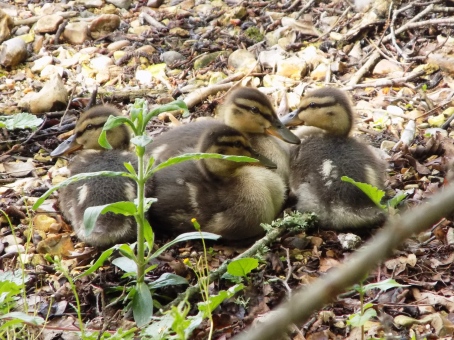
I came across a brood of mallard ducklings today sheltering on the shore of the fishing lake.
DSCN3757
Given their size and location I think there’s a likelihood this is the same brood I spotted a few weeks ago when they are very young. There were fifteen ducklings then and were only four today- it’s entirely possible that the missing eleven ducklings were all predated. It shows how hard it is to raise young in the wild and why it’s worth having so many young if over a quarter of them are lost.
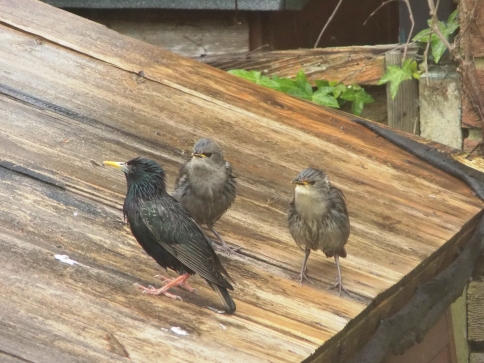
This week the first starling fledglings started to arrive in the garden. They are fun to watch as they stagger around, not quite in full control of their limbs yet, and beg their parents for food.
DSCN3709DSCN3723
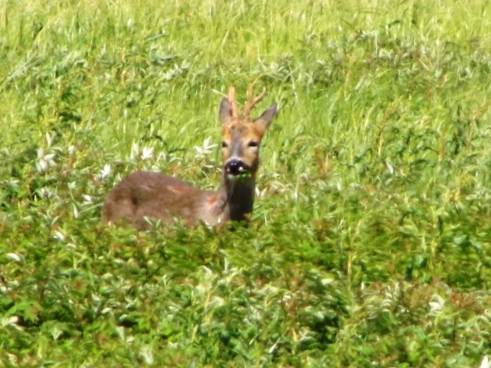
I haven’t seen much of the Avon roe deer over the last month or so. I suspect that with the arrival of Spring they have more options for places to eat. I did spot several individuals yesterday though they can be difficult to see in the long grass.
DSCN3688
As you can imagine, when this buck had it’s head down and was eating you could barely see it at all. It’s around this time of year that roe deer start to give birth to their young so I shall be looking out for that, though I suspect the fawns will be almost invisible in this sort of foliage.
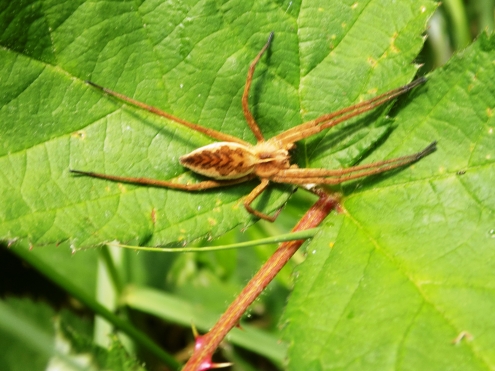
Apologies to arachnophobes but here’s a magnificent spider I found this week:
DSCN3682
This is a nursery web spider (Pisaura mirabilis). Like many spiders this species has interesting mating behaviour. Males approach potential females with a gift, a fly or other insect wrapped up ready to eat. When the female bites on the gift the male starts to mate with her. To make sure the job gets done he keeps one leg on the gift in case the female tries to escape with it or attack him. If this does happen the male will pretend to be dead (it’s called ‘thanatosis’) and will be dragged along by the leg touching the gift. When the female stops the male carries on mating.
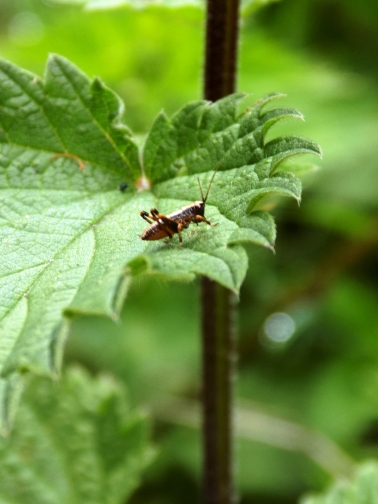
Here’s another invertebrate I spotted recently:
DSCN3741
I’m not entirely confident on the ID of this one. It certainly looks like a grasshopper or cricket with that leg structure, possible a roesel’s bush cricket. It’s early in the year and this looks really small so I would hypothesise that it’s a nymph. Females are green so this is a male (assuming I’ve managed to identify the right species).
I was disturbed to see in the news recently that Theresa May and other members of the conservative party want to repeal the ban on fox hunting. When polled, 89% of the British public said they agreed with the ban. May has often stressed how she follows the public’s wishes, seeking out a Brexit deal, so it seems hypocritical for her to go against the public on this. Besides, with Brexit and the issues with healthcare and education funding fox hunting doesn’t feel like it ought to be something the government is even thinking about at present.

Saturday, 6 May 2017

Owl's That

I spent a lot of time wandering the local countryside. I usually see some wildlife of interest on every walk. Sometimes I get really lucky and see something particularly exciting. Today was one of those days.
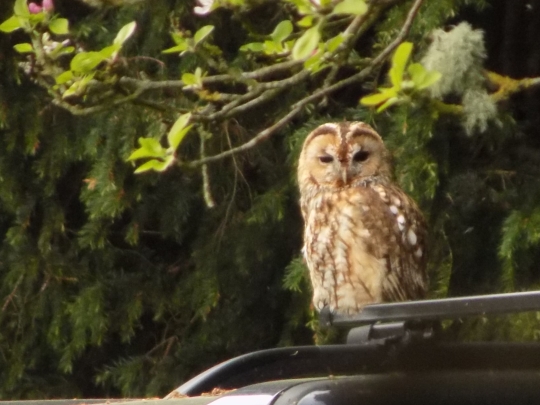
I was wandering along a country road when I caught a glimpse of this magnificent bird.
DSCN3669
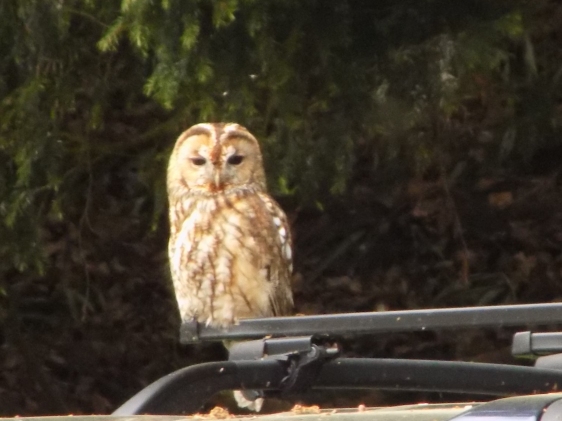
This is of course a tawny owl. Tawnies are well known for being a bird which is regularly heard but rarely seen. Indeed I regularly here tawnies calling locally but I’ve never seen one until now.
DSCN3676
You would expect to see tawnies at night but I found this one at 2:30PM. This is probably it’s roost site- it’s actually sat on a 4×4 in someone’s garden! It certainly looked sleepy, a little wary of my presence nearby but showing no inclination for flying off. I think this was probably the best wildlife encounter I’ve had so far!
In other news, there’s now quite a few greylag goslings on the nursery field, somewhere in the region of fifteen.
DSCN3639
I was interested to see that two of the goslings were much lighter than all the others. In some domestic geese this can indicate gender but I’ve not been able to find anything online about why greylag goslings look so different- it may simply be natural variation.
DSCN3648
I’ve seen lots of interesting invertebrates recently. A lot of people, even those interested in nature, seem to ignore the smaller animals around them but they are fascinated to find out about.
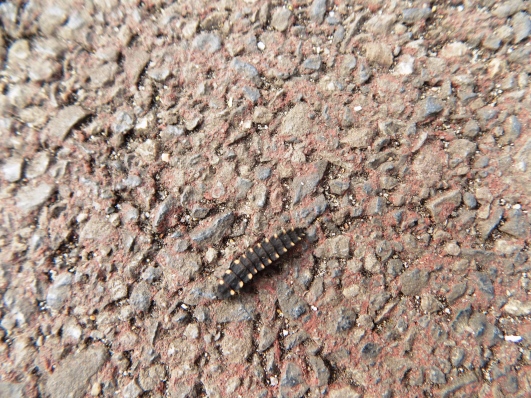
On one footpath I saw several of these creatures that looked like caterpillars at first. With further investigation I discovered that they were actually glow worm larvae.
DSCN3627
Despite the name glow worms are actually beetles, hence the larvae stage. Larvae and even eggs can emit light but generally it’s the females who do so. They emit a greeny or orange light to attract males which have large, photosensitive eyes.
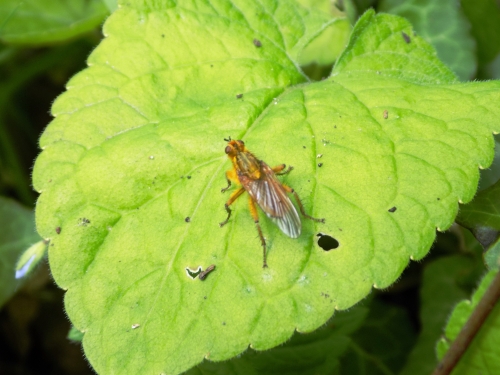
I recently saw this large fly which is apparently a yellow dung fly (Scathophaga stercoraria).
DSCN3638
As the name suggests, this fly is often found on the faeces of large mammals where they go to breed. They are actually really important to the animal kingdom due to helping dung to decompose and useful to humans to as they have been used for many experiments.
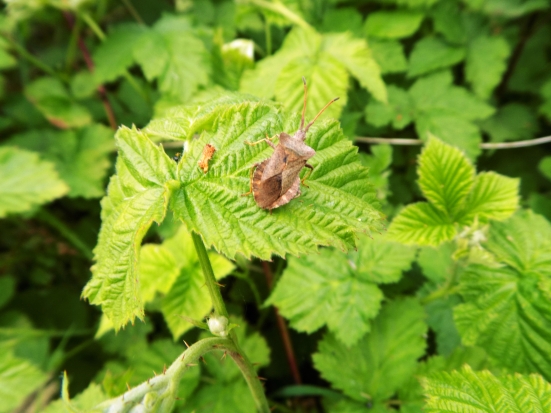
Another insect find was this dock bug (Coreus marginatus).
DSCN3645
Dock bugs have a more pleasant diet being herbivorous, particularly liking raspberries and gooseberries. Like other members of their family, they can release strong-smelling defensive chemicals if they are disturbed.
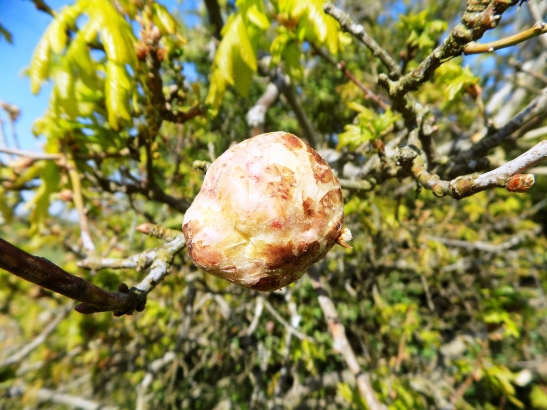
I’ve discussed some oak galls here before but never the most famous, oak apples.
DSCN3584
Like other galls, there are not fruit but growths caused by a wasp (probably Biorhiza pallida in this case) chemically inducing them. The larvae feed on the gall tissue and everyone’s a winner as it has no long-term effect on the oak tree.
Well that was an interesting dip into the miniature world around us! I’ll be back next week with much more, including an update on the peregrine falcon chicks.

Sunday, 30 April 2017

Fluffy Fledglings

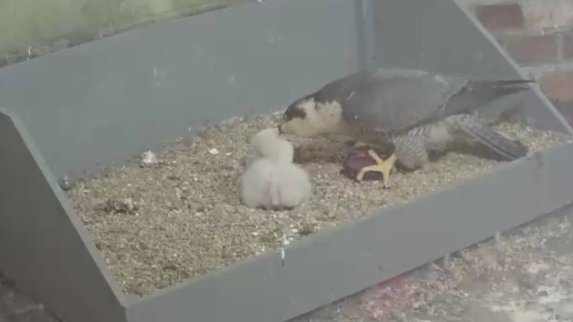
As expected, the peregrine falcon eggs in the Bournemouth nest started to hatch this week. The first came in the early hours of the 24th April and the second came later the same day. You can see the second chick hatching with the first chick behind the adult in this still.
24.4 2 chicks JPG
The third chick hatched two days later, on 26th April. At the time of writing it appears that the fourth egg has yet to hatch- last year the fourth egg of the clutch didn’t hatch at all and given the long gap it seems unlikely it will now. I’ve been keeping an eye on the nest and if you watch the webcam in the morning’s you can often see the adults arrive for a feed.
29.4
The three chicks are huddled together here as the adult hands them pieces of a huge kill. Mostly they are being fed pigeons which is hardly surprising in an urban area but this feed looks really like a lump of meat! Remember, you can watch the nest webcam online here and I’ll be keeping up with the chicks’ progress over the next few weeks.
More baby birds have appeared on my patch this week including this fluffy thing:
DSCN3595
It’s hard to identify from that shot alone but this is in fact one of a clutch of canada geese goslings. I spotted this family on the edge of the fishing lake with four very young babies.
DSCN3591
These are the only young canada geese I’ve seen so far but soon there will be quite a few and they will be collected together into a sort of nursery. Over on the nursery field some greylag geese have already arrived with their very small goslings. 
DSCN3621
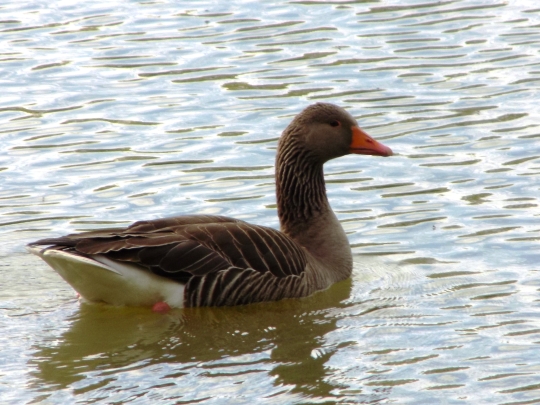
You can just make out four goslings in this image. The greylags seem less confident than the canada geese and always stick to the far side of the nursery field. Incidentally, here’s a very clear shot of a different greylag on the fishing lake.
DSCN3588
Greylags are thought to be the ancestor of all domestic geese, though generations of breeding mean their domestic counterparts now look quite different.
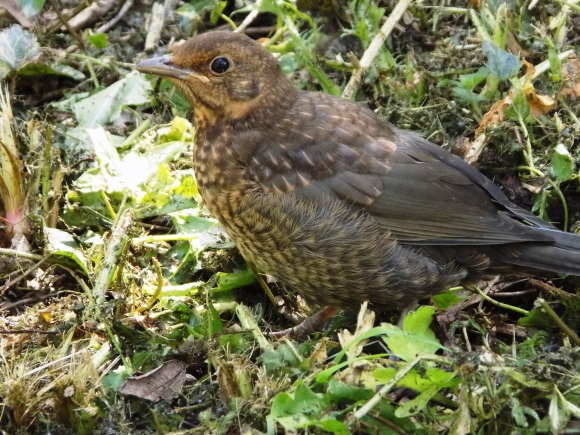
I’ve got one more baby bird for you today, a young blackbird.
DSCN3616
There are several ways to know if you’ve seen a young bird. Generally their feathers are fluffier than in adult birds, particularly on the underside. They often still have the yellow part at the side of the beak which the parents can’t help but pass food towards. You can also often tell from their behaviour- they are often less jumpy than adult birds and might allow you to approach quite closely. It means you can get clear photos like this one but I always make sure never to disturb the birds too much.
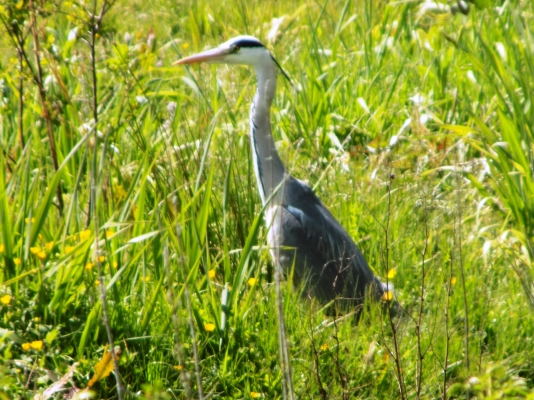
I’ve got good views of a few birds out looking for food this week- they too may have young they need to feed. Here’s a grey heron, perhaps the same one I saw catching a rat a few weeks ago.
DSCN3604
Only metres away I spotted the kestrel that is often hovering for food over these fields next to the river Avon and for once I managed to get a photo of it.
DSCN3615
I am always amazed at how these birds of prey can hover so well, keeping their head absolutely still whilst their wings flap so quickly.
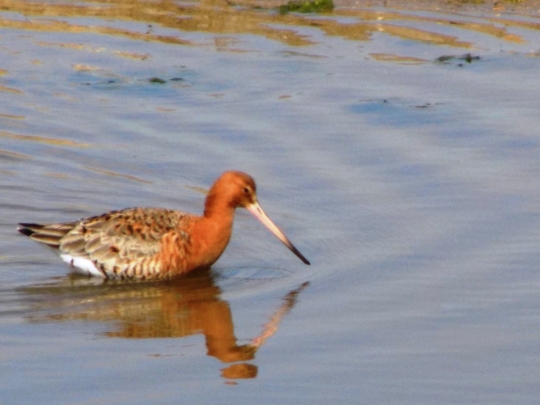
Finally, here’s a bird I talked about a little over the winter but now in it’s magnificent summer plumage, a black-tailed godwit.
DSCN3582
Black-tailed godwits are mainly winter visitors but I think this may be an unusual resident bird. There’s a fairly sizeable population over at Lymington-Keyhaven so it’s possible some birds breed here rather than migrate, especially with the mild winter we had this year.
That’s all for today so I shall see you in May!