Sunday, 29 April 2018

Delightful Durlston

The local roe deer have been much more visible over the last few weeks and I've had several close encounters with them.


It's interesting to compare these two male deer and note the differences. The top deer is probably a few years older as it has much longer antlers(1) and it's both bigger and more muscly than the lower deer. I think the bottom deer is about three years old and despite its diminutive size it was very confident. It was only a few feet away from me on the other side of a low fence and once it gave me a good stare it ignored me and carried on grazing. 

Last weekend I visited Durlston Country Park near Swanage in Dorset. The park has a range of habitats from woodland and meadows to sea-cliffs so it's a good place to see a range of wildlife. 

I found a few insects in the meadows such as this bloody-nosed beetle. 


This flightless beetle gets its name from it's unusual defence mechanism- when breathed on it secrets a blood-red liquid from its mouth which irritates the mouths of many mammals(2). 

Another insect I spotted was this dark-edged bee-fly. 


Like many species these insects have evolved to look like bees as a defence mechanism but they are actually harmless flies. Well, harmless to humans. Their larvae are parasitoids of mining bees that nest in colonies in the soil(3). The female bee-fly will hover above a mining bee area and flick eggs onto the ground. When the bee-fly egg hatches the larva crawls into the underground nest of a host bee and attaches itself to a bee grub to suck out its body fluids. I love looking into invertebrate life-cycles! 

You can spot what looks like a sting coming out of the bee-fly's head which is actually a proboscis or tongue. Like a hummingbird, these insects hover in front of deep flowers like primroses and stick their long proboscis into the flower to drink the nectar. 

I noticed what looked like cobwebs on a lot of the bramble bushes and a closer look make me realise they were webbing nest of brown-tail moth caterpillars. 


These larvae spend the winter inside the webbing nests before emerging in the spring to feed communally(4). Few insects feed on plants of more than two different families but this species has been recorded as feeding on plants from as many as 13 families. 

You really don't want to mess with these larvae. The loose hairs break off and can cause all sorts of problems for humans such as rashes, skin irritation, headaches and breathing difficulties. You shouldn't get too close to it and should wear thick gloves if you ever have to handle one. A related species which causes similar effects, the oak processionary moth, has been in the news this week due to outbreaks in London(5). 

Cows were grazing on the meadows at Durlston and I was amazed to see a brazen jackdaw use them as a feeding opportunity. 


This jackdaw was casually walking all over the cow pecking at insects that were attracted to it. The cow didn't seem too bothered (if anything the jackdaw as probably doing it a service) though it did lift its head a few times when the jackdaw got too annoying. 

I was really pleased to see some guillemots at the foot of the cliffs. 


These seabirds only come to land to breed and spend the rest of their lives at sea(6). From the top of the cliffs they look like penguins and their colour scheme is the same as penguins for the same reason- when they are swimming in the sea from below the white colour makes them blend in with the sky and from above the black colour makes them blend into the sea. 

The breeding colony at Durlston is the second largest on the south coast and also the most easterly- it's also right at the southernmost limit of their worldwide range(7).

Whilst it was a lovely visit, I was disappointed that I wasn't able to see the peregrine falcons which are regularly seen on the cliffs and the area is also a good one for spotting dolphins but I had no luck there either. 


Durlston Country Park is a great place to visit to see wildlife and somewhere I'd definitely recommend checking out. 

Sunday, 22 April 2018

April Nature News

It's the third weekend of the month which means it's time for my latest round-up of wildlife and environment news from my local area and the UK.

The Final Straw?

The government have been discussing the possibility of banning plastic straws and cotton buds from sale1. It's estimated that around 8.5 billion straws are thrown away in the UK every year and though pressure is beginning to build on companies to stop using them, we are still a long way away from them disappearing altogether.

At this stage all they have actually announced is a consultation on doing it so if a ban ever does come into place then it will be some years in the future. Still, it's good to see it being talked about and this idea was discussed at the Commonwealth Heads of Government meeting with the UK encouraging other members of the commonwealth to consider the same idea.

Meanwhile, a Lords select committee have been very critical on the government's countryside policies and said that it is failing the natural environment2. It says there has been "consistent failure, over a number of years, to prioritise the 'rural affairs' element" of the remit of the Department for Environment, Food and Rural Affairs (Defra) and that this has had a "profound negative impact... to the cost of us all".

In a previous edition of Nature News I discussed how poor many of the government's environment policies are so the findings of this committee are no surprise. I hope that it can help to put things right.

New Forest Pine Marten
One of my very first posts on this blog was discussed the fact a pine marten had been caught on a trail camera in the New Forest. This was in about two years ago and I've not heard anything further until now.

Twitter user Jon Cuthill (@joncuthill) shared this amazing video of a pine marten in his garden in the New Forest3:

Obviously this was not been properly verified but it's from a BBC journalist and certainly appears to show a pine marten in a New Forest garden. Pine martens used to be widespread in the UK but became virtually extinct outside of Scotland. Re-releases and small populations have meant they have returned to parts of England and Wales but the New Forest is not generally thought to be one of them. The trouble is that pine martens are usually nocturnal and are very elusive so seeing them is difficult enough, yet alone surveying how many there actually are locally.

Osprey Lost
Last year eight juvenile ospreys were released in Poole Harbour in the hope that they would be the start of setting up a new population there. The birds migrate to Africa over the winter and until this month two had been spotted there.

Now a third bird has been discovered, LS6, but unfortunately this one was found dead in the the Gambia4. The image below was sent shortly after the discovery of the body but was actually taken two months before it was found. Here LS6 is seen with a large piece of tail feathers missing, likely from a dog or even a crocodile. Though LS6 escaped initially, the lost tail feathers may have hindered it's fishing.


Like most migratory birds, it's fairly common for ospreys to die in the first year- only around 20-30% of juveniles return to the UK as adults. Though it's sad news about LS6 there are positives to take from it. It means that at least 3 of the 8 translocated birds made it to Africa with Poole Harbour's close proximity to the English channel allowing them an easier route than birds that set off from further North.

RSPB in the New Forest

The RSPB have announced that they are going to create their first nature reserve in the New Forest5. The reserve will be called Franchises Lodge and is near Nomansland in the north of the forest. The reserve was previously privately-owned land and is big, some 386 hectares. 

Once it's open to the public it sounds like it will be a fascinating place to visit. It's apparently home to an internationally important lichen community and exciting birds like hawfinch, spotted flycatcher and wood warblers. I can't wait to go! 

That's all for this month but there will be more Nature News in May.

1: BBC News- Plastic straw and cotton bud ban proposed
2: BBC News- 'Radical change' needed on countryside
3: Twitter: @joncuthill
4: Roy Dennis Foundation: Sad news about LS6
5: BBC News- 'Secret' woodland to be first RSPB New Forest reserve

Sunday, 15 April 2018

Signs of Spring

It is finally starting to feel more like Spring although we've still had lots of grey, drizzly days this week.

With the sun out one day I was keeping a close eye on a verge looking for insects when I managed to spot this well-concealed slow worm.


Slow worms, like other reptiles, hibernate over the winter(1) so this was probably one of the first times it had emerged this year. The thing I found most surprising was the location. It is no doubt on the verge because it faces the sun but seeing it next to a footpath not far at all from the centre of town was totally unexpected. 

More plants are coming into flower now that the temperatures have risen. One that I've seen a lot lately is pussy willow. 


Willow trees are single-sexed and these flowers only appear on the male trees(2). Both sexes produce nectar but these male flowers are important to insects due to the copious amounts of pollen they produce- the yellow blobs are the pollen. 

In several local woodlands I've seen carpets of wood anemones appear. 


Given the way they cover woodland floors you would be forgiven for thinking that they spread very quickly. However, wood anemones only spread at a rate of six feet every hundred years so are a good indicator of ancient woodland(3). Hoverflies like wood anemones are an important pollinator for the species but it's not much used to most animals as food because of an acrid taste. 

Today I was pleased to see the first bluebell of the year near the fishing lake, one solitary plant in flower. 


I went out into the New Forest this week which always leads to some lovely views. 


Whilst in the forest I heard several cuckoos calling which meant they have arrived back for the breeding season from their wintering grounds in Africa. Over the last few months I've been following the BTO's tagged cuckoos, particularly Selborne who was tagged in and returns to the New Forest(4). It's staggering to see how he has flown across much of Africa, including the Sahara desert, before crossing the sea to eventually arrive back at the New Forest. 

Meanwhile, I've spotted lots of Spring behaviour in the birds in our garden. Starlings and other birds have been ripping at the woody plant growing on the garage which backs onto our garden and flying off with whatever they can get hold of. 


The starlings nest in the cavities of the houses on our estate as they are easily accessible. You can see them disappear into the holes. Often we have some nesting in our roof and you can hear the chicks calling when the feeds begin early in the morning. 

Meanwhile it's been open warfare for the blackbirds recently. 


We seem to have two male blackbirds visiting the garden at the moment but it's not really big enough for the both of them. When they spot each other they lunge towards each other until one back off. They never seem to go far though and retreat to the safety of the shed or a fence before trying to sneak back into the feeding area. Inevitably they are spotted by their rival and the fight continues once more. 

To finish today here is a lovely piece from Ringwood TV about the Poulner Toad Patrol who help amphibians crossing the road to get to their breeding area. 


Sunday, 8 April 2018

From Rain to Sun

We had a lot of rain here over the Easter weekend. The river levels reached as high as I've ever seen them with one measure suggesting water levels reached as high as four feet (1.2 metres).


The river meanders across the footpath meaning that the path and the few trees either side of it were the only dry land for some distance. This probably explains why I managed to spot this bank vole right next to the path. 


Bank voles have a longer tail than other voles, usually some fifty percent of their length1. They live in burrows with multiple entrances and I saw this individual disappear into one of them. It's likely some of the other led into flood water so this vole was probably limited in where it could go. They are a common species and an important prey species for foxes, owls and other birds of prey. 

I think the rain probably triggered a large amount of sap to secrete out of a recently cut tree branch along one of the paths. 


The smell of the sap was really strong and it was attracted lots of invertebrates. In the photo above you can see a woodlouse feeding on it and there was a steady stream of ants coming to and fro to the sap. 


The wetter weather has also probably supported some of the fungi species I've seen this week. These golden globules on a fence post are fungi of the genus dacrymyces probably a common jellyspot.


These fungi often appear on fence posts and can be found at any time of year where there's wet weather2. 

I also spotted this witches butter fungus. 


This fungus gets its name from it's yellow colour though during wet weather it turns much darker as you can see. 

On Thursday the rain finally stopped and the first butterflies of the year emerged. 


This is a brimstone and I saw lots of these in flight on Thursday. Brimstones hibernate in the winter in ivy, holly and bramble and then re-emerge on warm spring days, though usually a few weeks earlier than this3.I also saw a handful of peacock butterflies which also hibernate over the winter4.

I was also pleased to see some more flowers emerging


This is lesser celandine, a woodland flower which is one of the first to flower- as you can see here, they provide a useful lifeline to insects when few others are in flower. 


This is a primrose which although I saw in the wild looks to me like a cultivated variety. Though primroses are often yellow it's also quite common to see them in this paler form. The name 'primrose' literally means 'first rose', indicating it's early flowering. 

Finally, here's a bird I stumbled on at a quiet patch of river, a little grebe. 


This bird is already in it's summer plumage. Little grebes eat fish like other grebes but as they are smaller only eat smaller fish, meaning they are distributed more widely. Though relatively common they can be difficult to see, especially at close range, because they are shy and normally dive under the water and resurface some distance away5. This individual tried to do that but it was still close enough for me to photograph when it emerged. 

1: Konig, Claus (1973). Mammals. Collins and Co. pp. 110-111

Saturday, 31 March 2018

Foxes Unearthed

I recently read Foxes Unearthed: A Story of Love and Loathing in Modern Britain by Lucy Jones which looks at the fox, the biggest land predator still around in the country and human's complicated relationships with it.

The early part of the book gives us a history of the fox in mythology, as Reynard, a trickster character and how it moved on to Fantastic Mr. Fox. Then we see what foxes are actually like and go into some depth in their behaviour. The bulk of the book though looks at human views on foxes from killing them or deterring them in urban areas to the hunting argument and those opposed to it.

The real highlights of the book was where the author got directly involved with the people she was speaking too. She spends a night out with a fox pest controller, watches a trail hunt and joins in with some hunt saboteurs which sounded like an genuinely unpleasant and scary experience. She does a really good job at letting people have the opportunity to share their views, whatever they may be.

Jones does a great job at showing how complicated feelings towards foxes are. She regularly mentions how pest controllers and hunters often like foxes and how though the general public have a love for them they often don't like seeing them on the doorstep. As with most issues, it's worth remembering that not everything is as black and white as it may seem.

Jones is clearly a great journalist and for the majority of the book takes a neutral position. I would perhaps have preferred more of an opinion from her- some anti-fox arguments could have been more firmly put down with from her rather than from a third party source.


I find it difficult to accept some people's argument that foxes are a pest as many people argue. I can understand how frustrating it must be when foxes kill poultry or even occasionally lambs but it's very much a solvable human problem. A good fence should be enough and there are plenty of other ways of deterring foxes. Foxes in urban areas actually do us a favour, reducing the rat population, and very rarely have much impact on human lives- in those cases deterrent methods usually work.

Fox-hunting is clearly wrong. Some argue it's pest control but it seems to me it's mostly for pleasure. People also say that foxes even enjoy being chased and aren't stressed by it as they are wild animals that are used to predation. Just because an animal is using to being predated doesn't mean it isn't stressed from it and besides, British foxes are clearly not used to being chased in this way. Being chased for miles and then ripped apart by hounds is clearly not a humane way to die. 

There is one reason I can accept for killing foxes humanely, something the RSPB actively does at some times of year- to protect endangered species. Clearly the life of a rare animal has to trump that of a more common one. It's not a pleasant decision to make but one which is sadly necessary thanks to human action. This is something which only happens for a few weeks a year when there is no other option.

Overall a well-written and researched book on people's attitudes to foxes which made me realise how complicated people's views of them really are.

Sunday, 25 March 2018

A Cool Curlew

With Daylight Saving Time starting to day it is starting to feel a little more like Spring but it will likely be later than we have seen for a few years.

Last Sunday (18th March) we had another significant snowfall here. To get any snow at all here is unusual but I've never known a winter where we've had more than one period of snow.

Goosander in the cold Avon


The snow didn't stop this robin from singing
It looks like the snow has finally gone for good and wildlife can start getting on with Spring. I recently visited Lymington-Keyhaven nature reserve where I got some close views of a few waders. One of these was a turnstone which was failing to live up to its name.


Rather than turning over stones this bird was searching through the seaweed for food. They mostly eat insects, crustaceans and molluscs(1)- it looks like it might have found a small crab in the first photo. Unlike most waders though turnstones will happily scavenge anything they can find and have been recorded feeding on coconuts and even human corpses!

An even more stunning bird was this curlew which was right next to the path. 


You wouldn't think a brown bird could be so beautiful, would you? Curlews can be seen all along the South coast during the winter but this area is the only part where they can be seen all year around, both along the Solent estuary and in the New Forest(2), though their numbers are in decline.

At my work in Bournemouth this week I've seen the car park fox for the first time in a little while. 


Given the size this fox appears to be a vixen. This is the time of year when vixens are pregnant(3) so they are likely to be a little more lethargic than they are at other times. For several days running this vixen was curled up in the corner of the car park in a sunbeam- it's probably the warmest place around at that time of day. 

I was disappointed to see a woman shoo this fox away one morning. I work in a school so I'm assuming she was worried that the fox might be a threat to the children. Foxes attacking humans are minutely small though, especially a small vixen like this one, and the far end of the car park is some distance away from the nearest playground. It's really brightened my morning to see this fox and it's disheartening to think some see it as a vicious monster which it clearly is not.

Over the last few years I've been following the peregrine falcon nest in a clock tower in the Lansdowne area of the town. In 2016 the first egg was laid on the 15th March and in 2017 the 16th March. This year however it was still quite cold by that time and there was no sign any eggs. Finally, the first egg was laid with just minutes left of the 21st of March. 


Clearly the cold winter has meant the falcons delayed laying this year. I kept an eye out on the camera over the next few days and enjoyed some good views of both adults. 


I thought I'd just check on the nest before finishing this blog post and discovered that a second egg was laid at 12:58 this afternoon!


This pair typically have four eggs so I would expect the same again this year. They should start hatching towards the end of April. You can watch all this for yourself on the webcam here.

That's all for today but hopefully I'll be out and about lots over the next few weeks so stay tuned to see what I spot.

3: Jones, L.(2016) Foxes Unearthed: A Story of Love and Loathing in Modern Britain

Sunday, 18 March 2018

March Nature News

Hello and welcome to this month's Nature News where I round up wildlife and environment stories from the local area and across the UK.

Local Wildlife Crime

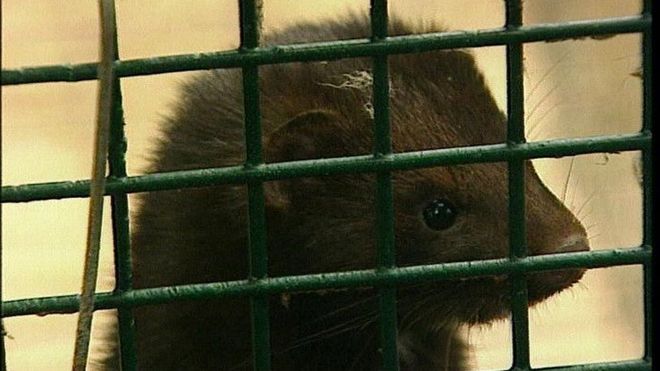
Until 1998 there was mink farm here in Ringwood, just up the road from where I live. Animal rights activists attacked the farm and allowed thousands of american mink to be released into the countryside. I am totally against fur farming but the activists made a huge mistake. Many of the mink were killed to protect pets and livestock and I dread to think of the effect some 6,000 mink had on the local wildlife population. The farm is not far from the New Forest where there are many ground-nesting birds whose numbers are in decline- for mink the eggs make easy prey.


The story re-entered the new this week as it has emerged that the activist group had been infiltrated by the Metropolitan Police(1) . They knew about the raid and actually allowed it to happen as they saw it as preventing more serious crime in the longer term. No charges have ever been made for the raid and Hampshire Constabulary didn't even know about the undercover officer until 2014! The actions of the activists is bad enough in itself but the police knowing it was going to happen and allowing it is inexcusable.

More recently, local property developer and millionaire Christopher Wilson was convicted of damaging the breeding sites of two species of bats while building a block of luxury flats in Ferndown(2). The licensing procedure was ignored meaning money was saved and the property could be developed more quickly. I total he had to pay just under £5,000 which doesn't seem very much for a millionaire- the amount he saved is not specified but it could conceivably still be less than the total fine. Either way it's not a great incentive for property developers to follow licensing procedures if the penalty is so slight.

Government Environment Policy

The government has been positive on environment policy recently with many promises in the twenty-five year plan. Environment secretary Michael Gove even suggested recently that plastic straws could be banned(3).

Since then however, things have taken a turn for the worse. The mooted "latte levy", a 25p surcharge on disposable coffee cups has been questioned by the government(4). I've read the news story over and over trying to understand their reasoning and all I pick out is this:

"it is better for shops to offer voluntary discounts to customers bringing their own cups."

How is that better? Why rely on shops to be proactive rather than make it law and really make a difference?

Then there's the badger cull, a policy the government is insistent on as a way to curb bovine TB despite limited evidence it is effective and the damage it's doing to the badger population. Nine new areas have come forward to be considered for culling licences, including Hampshire(5)- there is little reason to think they won't be granted. In 2017 around 20,000 badgers were culled in England. The estimated badger population for England and Wales is 485,000(6). If these licenses are granted and a similar amount are killed in these nine new areas as well as the current eight areas that would be around 40,000 badgers culled a year. The culls are supposed to happen for five years. It's insane that this is being allowed to happen.

Finally, for now at least, the government have responded to a petition to license driven grouse shooting(7). It's a statement full of waffle which you can read in full in the link but basically they say they are not going to even consider this approach and are going to carry on as normal. Normal means that birds of prey are illegally killed on the uplands to protect the grouse shooting industry with few prosecutions. These birds of prey include hen harriers who are on the verge of extinction in the UK.

I'm disturbed by the fact that the government's actions are not reflecting the promises they have made. They say they are committed to support the environment yet their actions point the opposite direction.

New Species of Fungi
I've learnt a lot about fungi over the last few years but identifying them can still be really tricky. There is very little visual evidence to distinguish some species from each other. Botanists at Kew Gardens have been studying the big blue pinkgill (Entoloma bloxamii) and through morphological and DNA studies have concluded it's actually at least four species (Entoloma atromadidum, E. bloxamii, E. madidum and E. ochreoprunuloides)(8). DNA sequencing is revolutionizing studies of the natural world and it seems there are many more species than we previously thought.


Microplastics
I've been discussing microplastics a lot recently and new studies are showing just how widespread they are. Microplastics are microscopic pieces of plastic that are toxic and gradually build up along the food chain.

I think we are all aware of the problem of microplastics in the oceans but it turns out they are building up in our rivers too. Scientists from the University of Manchester analysed 40 sites throughout Greater Manchester and found microplastics at all sites(9). Urban waterways were the worst affected. This may have been a fairly small study but there's nothing to suggest it wouldn't be the case throughout the rest of the country- virtually every river runs through an urban area at some point.

There was also a sizeable study on microplastics in bottled water which is alarming(10). Analysis of 259 bottles from 19 locations in nine countries across eleven different brands found an average of 325 plastic particles for every litre of water being sold. Only 17 bottles were plastic free. It's a relatively small amount but that's just an average with some being considerably higher and over years this could build up in your body. The World Health Organisation have launched a review on the risks of this but it seems likely it will be causing harm.

An Easter Idea
With Easter on the horizon I thought I'd end with a product you might consider for your loved one this Easter. A chocolatier called Mirrie Dancers are selling chocolate curlew eggs which not only look amazing but around £1.50 of the sale price goes to the RSPB's curlew recovery program!


That's all for this month but there will be more nature news in April and I'll be back with a new post next weekend.


3: BBC: Plastic straws could be banned, suggests Michael Gove
4: BBC: Ministers question 'latte levy' on cups
5: BBC: Nine areas of England apply to join badger cull
6: Farmers Weekly: Badger population rises to 485,000 in England and Wales
7: UK Government and Parliament Petitions: License driven grouse shooting
8: Discover Wildlife: Big blue surprise
9: BBC: Microplastics are 'littering' riverbeds
10: The Guardian: WHO launches health review after microplastics found in 90% of bottled water

Monday, 12 March 2018

Thankful for the Thaw

Last week's snow disappeared astonishingly quickly and the temperatures shot up. There's a feeling of Spring in the air now with lots of trees suddenly coming into flower.


The "beast from the East" brought lots of birds over from mainland Europe, especially fieldfares and redwings1.


This is one of the many redwings I've seen locally recently though sadly I've yet to spot a fieldfare. It's unlikely that many of these birds will be around for much longer as they migrate back to mainland Europe in the Spring2. Lots of birds that have spent the winter in Spain and Southern Europe will stop off in the East of the country on their way further North. 

Another bird that seems to be around in higher numbers than usual this winter is the goosander. 


I've tried to find evidence that this is a national trend but struggled to find much. A local Scottish newspaper recently reported that increasing numbers of goosanders were partially responsible for poor fishing on the River Tweed3, though again that seems to be anecdotal evidence rather than scientific. Numbers certainly appear to be on the up though and I like to imagine that one day in the not too distant future we might have breeding goosander locally. 

A few other local spots now. Here's one of our stranger small birds, the nuthatch. 


Nuthatches look a little like small woodpeckers and behave like treecreepers, walking up and down trees to find items of food in trees3. Whilst most birds migrate or at least move a little in their lifetime, nuthatches rarely move far from where they hatched. They are a bit more flexible when it comes to food than treecreepers and will feed on the ground and come to feeders when they need supplement their diet. 

I also saw a green woodpecker up a tree recently. 


You might imagine that this is where you would expect to see a woodpecker but this species is more often seen on the ground where they feed for ants4. Green woodpeckers have much weaker bills than other species and therefore peck wood much less often. They don't drum to communicate like other species and rarely feed on trees, only doing so at times of low food5- which I suspect might be the case at the moment. It's also possible that they are beginning to excavate nest holes.

Whilst I am still deeply sad about the new housing estate which is shooting up on former farmland at the moment I am finding it interesting to see how the local wildlife is adapting to it. There are long metal fences along the perimeter of the site and I've previously seen buzzards using it as a perch- this weekend I saw a kestrel doing the same. 


These fences, just over human head height, are really useful for kestrels. Whilst they often hunt using their famous hover technique, they also jump down at prey from low perches. There is, at the moment at least, long grass directly below this fence which is perfect for rodents. I watched as the kestrel leapt down from it's perch though it didn't seem to be successful on that attempt. 

Here's another kestrel from a few weeks ago which was hovering in order to hunt. 


Finally, here's a few more photos from the last of the snow and the last week. 

A Feral Pigeon looking rather confused by the pile of snow atop the bird table.

Water dripping down from the eaves created these icicles on a bush under our living room window

Robin in the snow

Dunnock


The Avon Roe Deer reliably in their usual spot.

This Grey Heron was hunting amongst the high grasses on the flood plain. It looks like it may have damaged a wing but i was too far away to be able to see clearly.
That's all for today but I'll be back at the weekend with the Nature News for March.