Showing posts with label Bournemouth Peregrines. Show all posts

Sunday, 13 May 2018

Charming Chicks

Over the last few weeks chicks have started to hatch and fledge in large numbers so today's post features lots of cute baby birds.

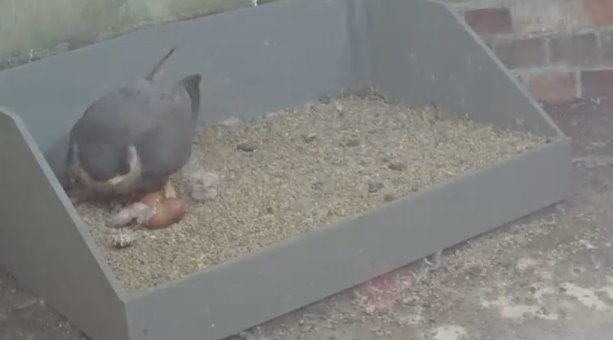
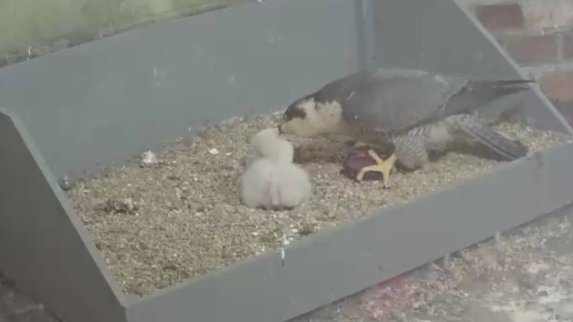
The Bournemouth peregrine falcons laid three eggs in the end and all three successfully hatched!


Getting clear shots of the three chicks is proving quite tricky at the moment as the adult is almost always brooding them. They appear to be doing really well with the adults bringing in regular and sizeable meals. These are an experienced pair who who have excellent hunting weather since the eggs hatched so I would expect these chicks to grow up healthily. 

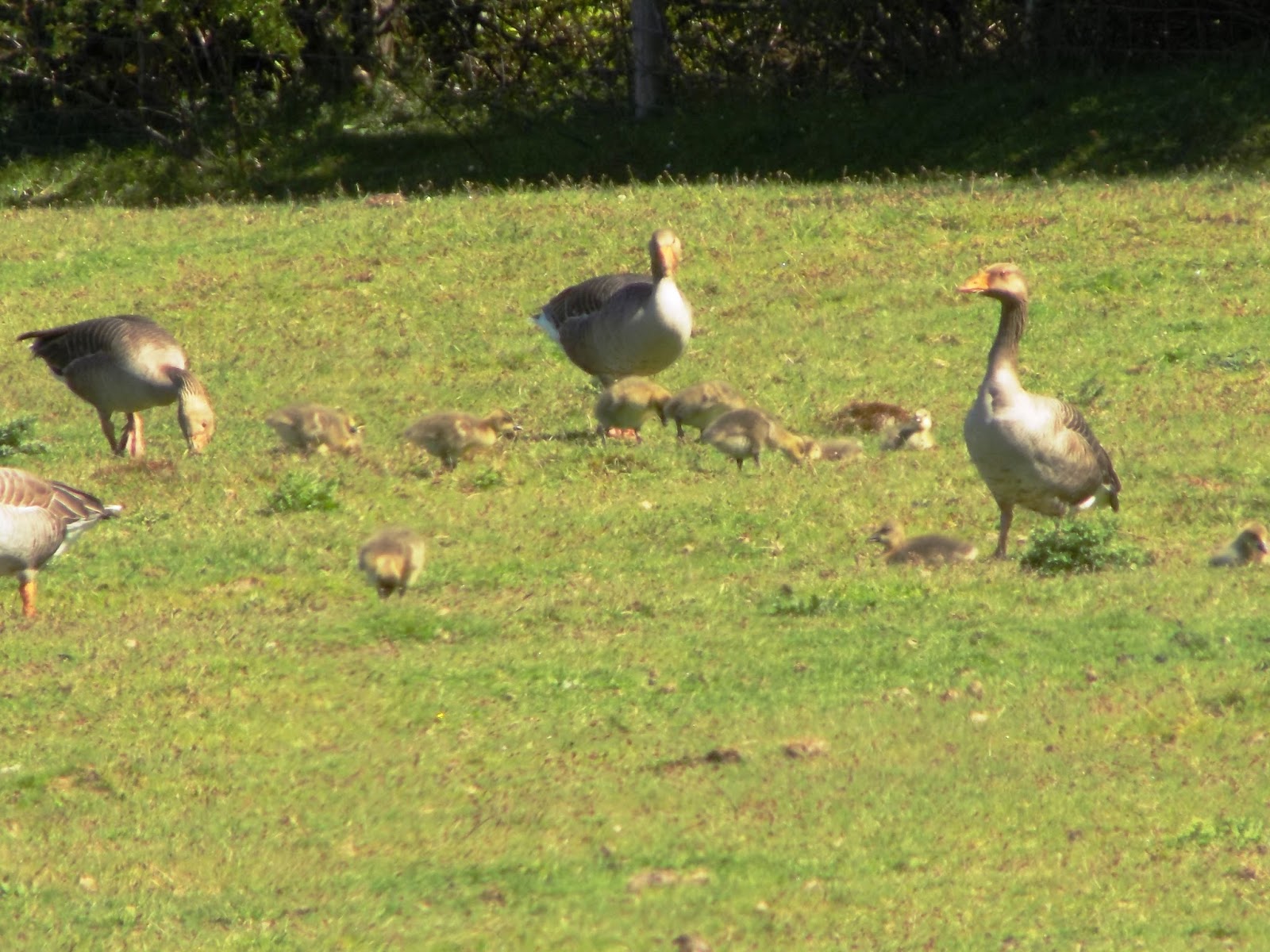
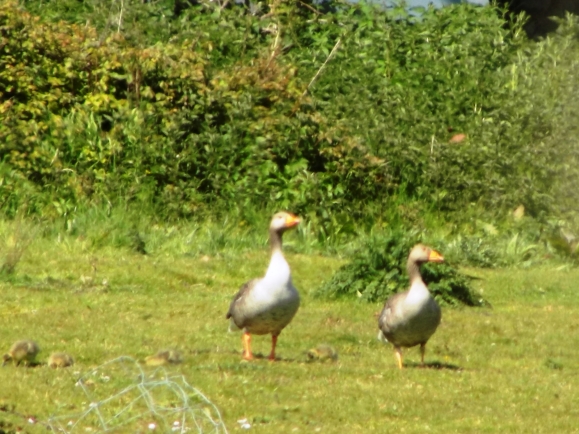
Meanwhile the gosling nursery field has suddenly become full of goslings. The first I spotted were the greylag goslings. 


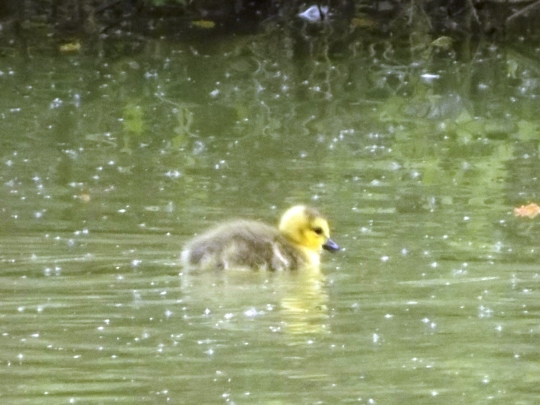
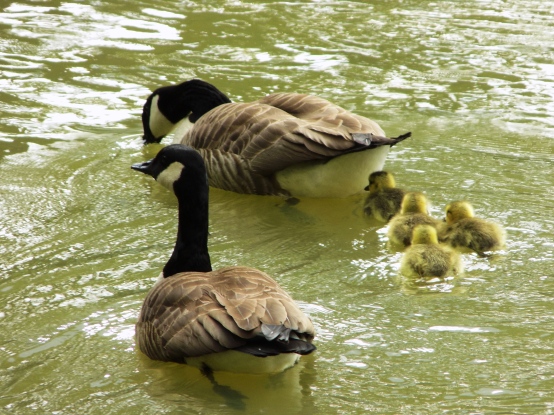
Within two days they were joined by around thirty canada geese goslings. 


Canada goslings are fairly well developed when they hatch with their eyes open and leave the nest within 1-2 days1. In many places they form these 'gang broods' where several broods come together- I think there must be at least three here. The advantages of this tactic are clear- a predator would likely wipe out one brood with just two adults to protect it. Here though any predator would face a whole load of adults and even if it caught some goslings the overall proportion would still be lower. It's definitely a case of safety in numbers.

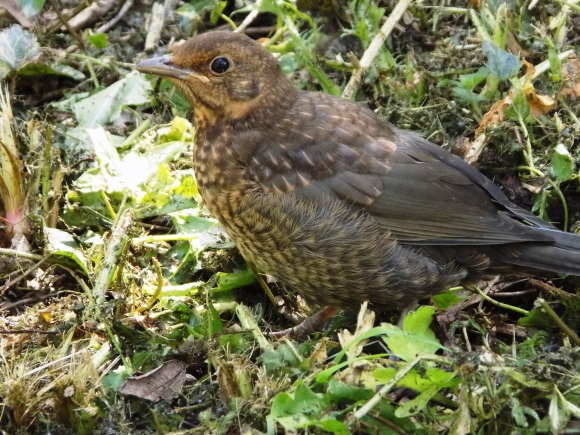
Very close to my house last weekend I found this very young looking fledgling. 


It's difficult to confidently identify the species but I suspect that this is probably a starling. It still looks very much like a chick with it's downy feathers and that yellow mouth called a 'gape'2. The gape acts as a target for adult birds who feel an irresistible compulsion to put food in it. Gradually the gape flange, the outer parts of the mouth, will shrink and turn dull as the bird grows older. 

This individual cannot have fledged very long before I found it and was sat in the middle of a footpath. It was extremely vulnerable there so I gently ushered it into the bushes where it would be better protected from predators, especially the local cat population, and be further away from the road. 

Another recent bird sighting was this adult grey wagtail


As you can see this wagtail has a beak stuffed full of what appear to be caterpillars. The fact it is holding them rather than eating them suggests that it is about to take them to it's young in a nearby nest. According to the information I've found grey wagtails are supposed to eat aquatic creatures rather than caterpillars but the latter may be easier to catch and I don't suppose the chicks are too fussy. 

Grey wagtails nest alongside a fast moving river or stream with a clutch size of between 3-6 eggs. 

Finally for today, here's one of the many butterflies which has emerge in recent weeks. 


This is a speckled wood and it seems to be common for them to lose parts of their wing. The spots look like eyes to predators, mainly birds, which then aim for the wing margin3. They may end up damaging the wing but butterflies can manage with a fair bit of damage and their body remains completely intact.

That's all for today, see you soon.

Sunday, 25 March 2018

A Cool Curlew

With Daylight Saving Time starting to day it is starting to feel a little more like Spring but it will likely be later than we have seen for a few years.

Last Sunday (18th March) we had another significant snowfall here. To get any snow at all here is unusual but I've never known a winter where we've had more than one period of snow.

Goosander in the cold Avon


The snow didn't stop this robin from singing
It looks like the snow has finally gone for good and wildlife can start getting on with Spring. I recently visited Lymington-Keyhaven nature reserve where I got some close views of a few waders. One of these was a turnstone which was failing to live up to its name.


Rather than turning over stones this bird was searching through the seaweed for food. They mostly eat insects, crustaceans and molluscs(1)- it looks like it might have found a small crab in the first photo. Unlike most waders though turnstones will happily scavenge anything they can find and have been recorded feeding on coconuts and even human corpses!

An even more stunning bird was this curlew which was right next to the path. 


You wouldn't think a brown bird could be so beautiful, would you? Curlews can be seen all along the South coast during the winter but this area is the only part where they can be seen all year around, both along the Solent estuary and in the New Forest(2), though their numbers are in decline.

At my work in Bournemouth this week I've seen the car park fox for the first time in a little while. 


Given the size this fox appears to be a vixen. This is the time of year when vixens are pregnant(3) so they are likely to be a little more lethargic than they are at other times. For several days running this vixen was curled up in the corner of the car park in a sunbeam- it's probably the warmest place around at that time of day. 

I was disappointed to see a woman shoo this fox away one morning. I work in a school so I'm assuming she was worried that the fox might be a threat to the children. Foxes attacking humans are minutely small though, especially a small vixen like this one, and the far end of the car park is some distance away from the nearest playground. It's really brightened my morning to see this fox and it's disheartening to think some see it as a vicious monster which it clearly is not.

Over the last few years I've been following the peregrine falcon nest in a clock tower in the Lansdowne area of the town. In 2016 the first egg was laid on the 15th March and in 2017 the 16th March. This year however it was still quite cold by that time and there was no sign any eggs. Finally, the first egg was laid with just minutes left of the 21st of March. 


Clearly the cold winter has meant the falcons delayed laying this year. I kept an eye out on the camera over the next few days and enjoyed some good views of both adults. 


I thought I'd just check on the nest before finishing this blog post and discovered that a second egg was laid at 12:58 this afternoon!


This pair typically have four eggs so I would expect the same again this year. They should start hatching towards the end of April. You can watch all this for yourself on the webcam here.

That's all for today but hopefully I'll be out and about lots over the next few weeks so stay tuned to see what I spot.

3: Jones, L.(2016) Foxes Unearthed: A Story of Love and Loathing in Modern Britain

Sunday, 11 June 2017

Birds and Bees

We're reaching the peak time of the year for wildlife so I've got quite a backlog of things to share with you.

First up, I spotted these harlequin ladybirds on a leaf near the River Itchen.


These are of course an invasive species which predate on our native ladybirds. What's interesting in this photo is the fact these two ladybirds look completely different but are actually exactly the same species. This one of the most variable species in the world and in my experience they are even highly varied in local populations, as above. 

Sometimes I spot something out of the corner of my eye and then have to try and work out where it went. One of these recent moments was on the edge of a field where I eventually managed to spot this cinnabar moth in the grass. 


This was likely a newly emerged moth. In the UK cinnabar caterpillars generally live on ragwort, a poisonous plant which is often removed from fields so that horses don't eat it. The bright colours on the moth serve as a warning to predators, as red often does in the natural world, as thanks to their diet these moths are unpalatable. 

Another lepidoptera sighting recently was this meadow brown.


As the name suggests, the larvae of this butterfly feed on grasses. I think this is probably a female because it has a very bright orange section- the male's have reduced orange areas. You can see two very small "eyes" on the underside of this butterfly- these are actually variable with between zero and six on each wing. 

I've also been enjoying watching bees going about their business at the moment. We are fortunate locally to have a sizeable population of honey bees. How many of these are wild and not from hives is impossible to know but either way, it means lots of pollination is going on.


There's plenty of other species of bees around too. 


This is a tree bumblebee. The amazing thing about this bee is that it was first found in the UK in only 2001 but is now widespread throughout England and Wales. Older ID book don't even list this species. They like to nest above ground and often inhabit bird boxes. 

The other most common species I've been seeing are buff-tailed bumblebees


There are several species of bee which look very similar with a white tail. However, this species has a subtle buff line separating the tail from the abdomen. You can download the Great British Bee Count App for a great ID guide and to help Friends of the Earth survey bees. 

At first glance there are plenty of other species which look like bees but actually aren't. These are usually hoverflies such as this one which I think is Volucela pellucens


This appearance is a clever disguise to make predators think it has a defensive sting like bees and wasps. It's not the only way this species is devious too- it lays its eggs in wasp nests where the larvae then feed on young wasps and dead adults. Despite the nests being well-guarded the wasps don't notice these hoverflies, perhaps because they can't distinguish them from wasps. 

Time for some birds now! Last week I visited Lymington-Keyhaven Nature Reserve. It's relatively quiet there at the moment now that all the winter migrants have gone but there were plenty of common terns around. 


Nicknamed 'sea swallows' due to their long tails, these are graceful fliers which can hover over water before plunging down to catch a fish. They come to the UK to breed and their eggs will have been hatching over the last few weeks. There's a fairly sizeable colony at Blashford Lakes right now. 

Another magnificent bird I saw at the reserve was this buzzard


Buzzards, like most birds of prey, look best when they are in the air doing what they do best. 

I haven't shared an update on the Bournemouth peregrine falcons for a few weeks now. The chicks were ringed on the 16th May where it was discovered there were two males and one female, the same as in 2016. I think the three chicks have now left the nest but here are a few shots from the last few weeks showing that they now look like adult birds. The birds become very active towards the end of their time in the nest which is why you can't see all three of them in all of these shots.


I'm pleased to be able to share another local peregrine falcon nest with you. We're a bit spoilt locally with the peregrines in Bournemouth College Clock Tower, Salisbury Cathedral (as being shown on this year's Springwatch) and for the first time there are now peregrines nesting on a water tower in New Milton. And there's a camera thanks to Bournemouth Water. 

Here's the three young being fed by a parent on the 7th June:


And here they are today in front of the nest, a little obscured by sunlight. 


You can watch this camera here, but you have to log in first- the username is water and the password is wat3r. There's more information on Bournemouth Water's website here.

That's all for today, thanks for reading as always.

Sunday, 30 April 2017

Fluffy Fledglings

As expected, the peregrine falcon eggs in the Bournemouth nest started to hatch this week. The first came in the early hours of the 24th April and the second came later the same day. You can see the second chick hatching with the first chick behind the adult in this still.
24.4 2 chicks JPG
The third chick hatched two days later, on 26th April. At the time of writing it appears that the fourth egg has yet to hatch- last year the fourth egg of the clutch didn’t hatch at all and given the long gap it seems unlikely it will now. I’ve been keeping an eye on the nest and if you watch the webcam in the morning’s you can often see the adults arrive for a feed.
29.4
The three chicks are huddled together here as the adult hands them pieces of a huge kill. Mostly they are being fed pigeons which is hardly surprising in an urban area but this feed looks really like a lump of meat! Remember, you can watch the nest webcam online here and I’ll be keeping up with the chicks’ progress over the next few weeks.
More baby birds have appeared on my patch this week including this fluffy thing:
DSCN3595
It’s hard to identify from that shot alone but this is in fact one of a clutch of canada geese goslings. I spotted this family on the edge of the fishing lake with four very young babies.
DSCN3591
These are the only young canada geese I’ve seen so far but soon there will be quite a few and they will be collected together into a sort of nursery. Over on the nursery field some greylag geese have already arrived with their very small goslings. 
DSCN3621
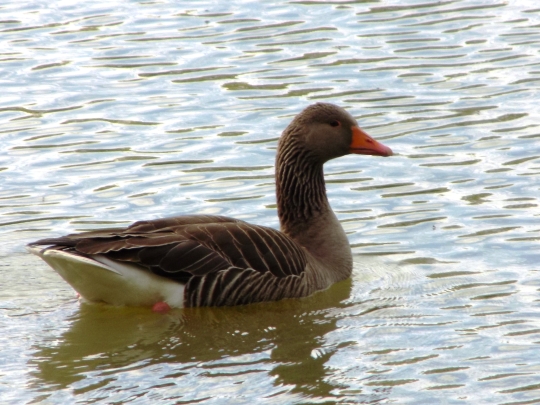
You can just make out four goslings in this image. The greylags seem less confident than the canada geese and always stick to the far side of the nursery field. Incidentally, here’s a very clear shot of a different greylag on the fishing lake.
DSCN3588
Greylags are thought to be the ancestor of all domestic geese, though generations of breeding mean their domestic counterparts now look quite different.
I’ve got one more baby bird for you today, a young blackbird.
DSCN3616
There are several ways to know if you’ve seen a young bird. Generally their feathers are fluffier than in adult birds, particularly on the underside. They often still have the yellow part at the side of the beak which the parents can’t help but pass food towards. You can also often tell from their behaviour- they are often less jumpy than adult birds and might allow you to approach quite closely. It means you can get clear photos like this one but I always make sure never to disturb the birds too much.
I’ve got good views of a few birds out looking for food this week- they too may have young they need to feed. Here’s a grey heron, perhaps the same one I saw catching a rat a few weeks ago.
DSCN3604
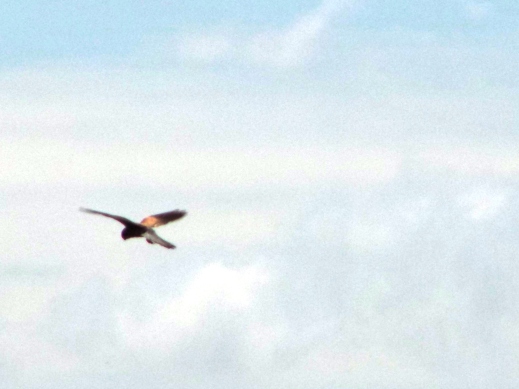
Only metres away I spotted the kestrel that is often hovering for food over these fields next to the river Avon and for once I managed to get a photo of it.
DSCN3615
I am always amazed at how these birds of prey can hover so well, keeping their head absolutely still whilst their wings flap so quickly.
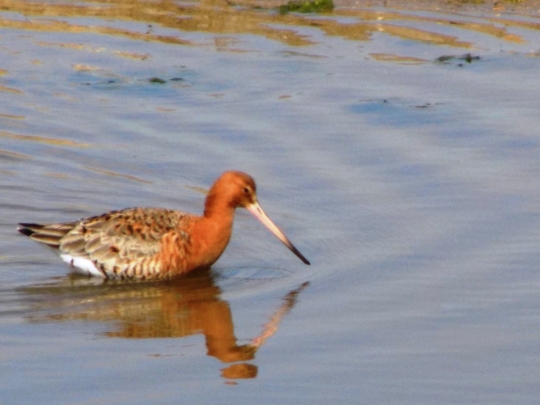
Finally, here’s a bird I talked about a little over the winter but now in it’s magnificent summer plumage, a black-tailed godwit.
DSCN3582
Black-tailed godwits are mainly winter visitors but I think this may be an unusual resident bird. There’s a fairly sizeable population over at Lymington-Keyhaven so it’s possible some birds breed here rather than migrate, especially with the mild winter we had this year.
That’s all for today so I shall see you in May!

Sunday, 26 March 2017

The Egg Thief

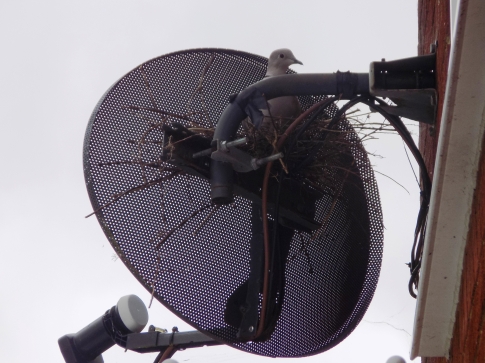
I will start today’s post with an update on the nests I have been following. Last week I introduced you to the collared dove that is nesting on the bracket of our satellite dish. It had laid two eggs.
DSCN3181
Yesterday there the mother was not sat on the nest which has been very unusual over the past week. I went and had a closer look at the nest from an upstairs window and discovered it was empty. Something had taken the eggs.
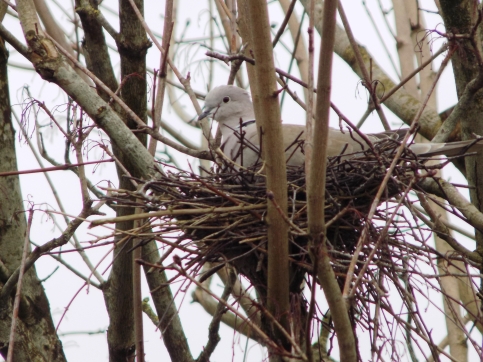
We have a magpie who is a regular visitor to our garden and it is likely it found the nest and ate the eggs. It’s easy to feel sad about this but it’s nature. The magpies will be laying eggs soon so this meal can help to give them the energy to build their nest and look after their young. Our collared doves will likely try again elsewhere and maybe they will have learnt their lesson about building a nest in such an obvious place. Only a few hundred yards down the road is this nest which is harder to reach.
DSCN3179
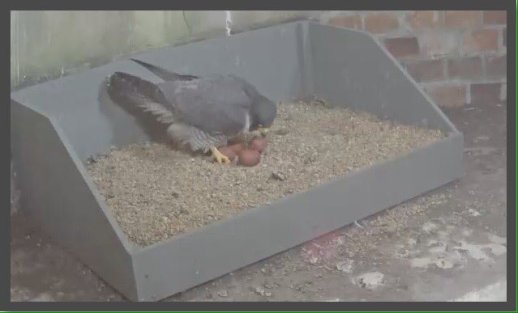
Having better luck are the Bournemouth peregrines who this week managed to lay another two eggs, bringing the batch up to four (the same as last year).
C7vrdS4XQAAYFNr
The eggs should start hatching around the 20th April. At the moment the eggs are being incubated virtually 24/7- this experienced pair certainly know what they are doing.
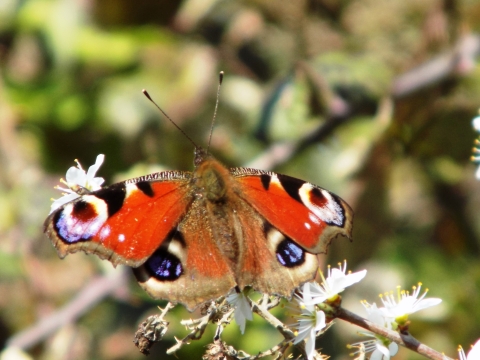
With Spring well and truly underway, the early butterflies are now fluttering around. I’ve seen a fair few brimstones around and also some peacocks which look absolutely stunning in the Spring sunlight.
DSCN3206
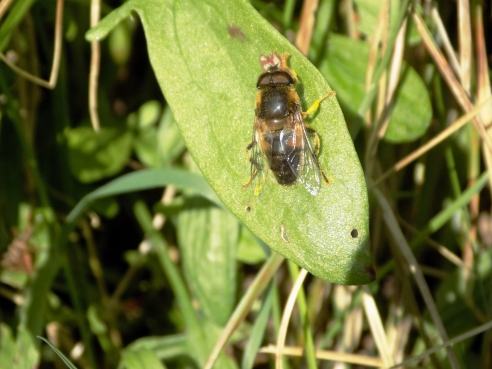
I have also noticed plenty of early bees and hoverflies buzzing around too. You would have thought pollen was limited at this time of year but this Tapered Drone Fly (Eristalis pertinax)  is covered in it!
DSCN3210
Fortunately I saw this adult rather than the maggot form as they sound really unpleasant. Tapered drone flies have ‘rat-tailed maggots’, the long tail acting like a snorkel as the organism breathes underwater. These larvae prefer water badly polluted with organic matter such as drainage ditches and pools around manure piles and sewage.
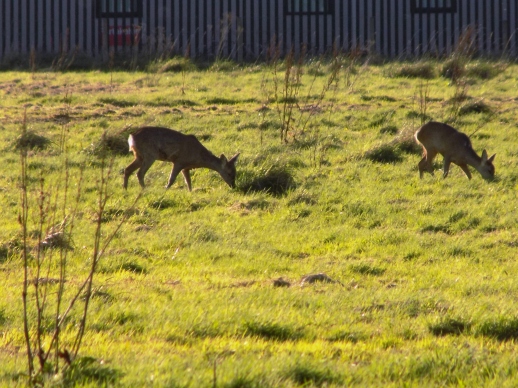
Not far away I saw some roe deer in a field.
DSCN3192
There were six deer here, five does and one buck. I can’t work out where these deer come from. There is the herd I usually see by the Avon not too far away and the lower New Forest deer are even closer but from either direction the deer would have to walk through built-up areas.
These deer will lose this site soon. A large development is being built on this site, at least sixty homes and likely more if the next phase of planning permission is granted. This is green belt land where I’ve also seen a kestrel hunting and a flock of meadow pipits. Then there’s the other environmental effects, like how this will affect the water drainage and adding even more cars to the local roads. In their wisdom New Forest District Council have decided none of that matters.
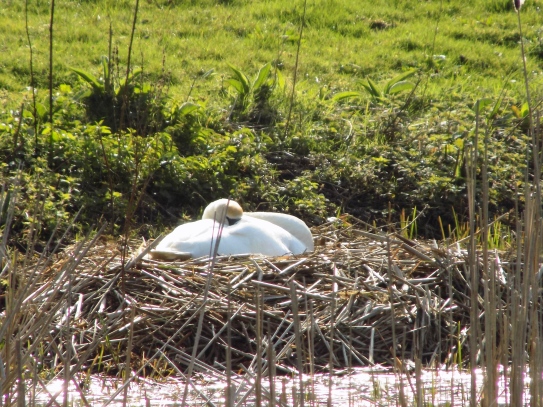
Let’s end on a happier note shall we? Here’s one more nest I’ve seen this week, a mute swan.
DSCN3222