Showing posts with label Lymington-Keyhaven. Show all posts

Sunday, 28 January 2018

The Friendly Frog

The last few weeks have been very wet here so I've found it quite a challenge to see much wildlife. Despite the poor weather it's clear that Spring is on the way with flowers starting to shoot out of the ground and snowdrops in bloom, as well as a few crocuses and even daffodils locally. The catkins on the hazel trees are starting to open up too.


For some time now I've been trying to get a photo of a goldcrest to share here but it's proven a challenging task. As well as being tiny, they dart around all over the place so finding one still enough to take a photo which doesn't end up blurry is very tricky. I was therefore very frustrated when one sat right in front of me last weekend when I was out in torrential rain without my camera. The best I could manage was this low-quality phone shot. 


Goldcrests are, along with the firecrest, the UK's smallest bird. They are usually around 9 centimetres long and weigh about 5.5 grams which is about the same as a twenty pence piece(1). Though many goldcrests stay in the UK all year round, many migrate from Scandinavia and mainland Europe to spend the winter here. Early ornithologists couldn't believe that such a tiny bird could migrate so far and thought they rode on the backs of short-eared owls or woodcocks, a great image but not true of course(2).

Goldcrest are almost entirely insectivores and spiders are an important part of their diet- that's likely what this individual was looking for when I saw it, looking for spaces in the old railway bridge where spiders might be lurking. 

For the first time I have an amphibian to share with you. I was just around the corner from my house when I spotted this common frog sitting in the middle of the pavement. 


Being right in the middle of the footpath in fading light was obviously a dangerous place for this frog to be so I gave it a gentle poke and it hopped safely into the undergrowth. 

Frogs hibernate in the winter so it's very early in the year to be seeing one. It is recorded that they start emerging from January though, as long as the night temperatures are higher than 5 degrees C(3). Given how early this one emerged it's likely it's a male- they tend to come out first and head towards a waterbody where they will wait for the females to arrive. Though not accessible for humans, this frog was actually only about fifteen metres away from the fishing lake so that is likely where it would be heading. 

When I write this blog I try my best to not write about the same species all the time so I usually have photos of things I don't end up sharing. As I'm really short on content and the month is drawing to a close I thought I'd share some of my previously unseen photos from January along with a few comments about some of them. 

First, here's a few of the usual suspects from a recent visit to Lymington-Keyhaven:

A group of dunlin
Dunlin are winter visitors to the UK and are usually seen in flocks like this. They feed in a 'sewing machine' action and here on the coast they eat molluscs, worms and crustaceans. 

Wigeon

Shelduck

Teal
My most regular walk is along a stretch of the River Avon where I always find plenty to take photos of. 

Mute Swan

Carrion Crow

I tend to regularly see crows all over the local area- though many birds are opportunist to some extent, crows are the more than any. Mostly I see them sitting in trees like this one where they can eat fruit or in fields where they find grain. I occasionally see them mobbing the local buzzards- they may be trying to steal prey from them- and a few weeks ago one was feeding on a dead fish which was lying on a bit of exposed gravel in the middle of the river. They will happily steal eggs and even hunt.

Grey Heron

These birds are surprisingly not instantly recognisable but they are female pheasants. Other than the shape and length of the tale they don't look very much like the males at all. I can only assume that the reason we see them far less than males is that they are much less noticeable and blend in well. Male pheasants happily breed with more than one female and then play no part in incubating or raising the chicks(4) so though they may be overlooked it's the females who are far more important to the species.


Song Thrush


That's all for today and fingers crossed the weather will improve other the next few weeks!


Monday, 18 December 2017

Winter Wonders

Yesterday I visited one of my favorite nature reserves, Lymington-Keyhaven. The reserve comes alive at this time of year as visitors arrive to enjoy our relatively mild winters.

It didn't take long at all until I spotted the first wigeon of the day.


Though small numbers of wigeon do breed in the UK (in Scotland and the North of England), all the wigeon around here are winter visitors from Russia, Scandinavia and Iceland1. The key identifying feature of wigeon are there bright yellow forehead, though this is only the case in males- females of most of our duck species look very similar. 

Also on the reserve were a flock of brent geese- whilst I have seen these birds at the reserve before, yesterday's visit was the closest I've seen them to the footpath on top of the sea wall. 


These brent geese come from a long way North, the Taymyr peninsula on the Arctic coast of Siberia. They fly some 5000 kilometres to reach us, cutting over Finland and going around the southern shore of the Baltic Sea on their journey2. They spend the winter feeding on eelgrass and on crops in nearby fields3. There are several subspecies of brent geese- these are dark-bellied. Scientists are divided upon whether these subspecies are genetically different enough to be identified as separate species altogether- at the the moment they remain one species. 

One further migratory bird I spotted was this greenshank


I'm lucky to live in one of the few parts of the UK where you can see greenshank in the winter. Many pass through the east coast and they can be seen in Cornwall and Devon but the only place further west than that in England is around the solent4. Indeed, we are lucky to have greenshank this far North at all during winter as the vast majority spend their winters in Africa, the Indian subcontinent and Australasia. 

So why do so many migratory birds spend winter at Lymington-Keyhaven? The reserve contains both a salt marsh and mudflats which are home to the invertebrates that these birds need to eat in vast numbers to survive5. There are also large creeks between the salt marsh which are perfect nursery areas for fish, again providing food for many of these species. The salt marsh also sits behind the sea wall which means these birds have their ideal coastal habitat yet are sheltered from the worst of the winter weather. 

Of course, I didn't just see migrants, I also saw plenty of resident birds. The highlight of these was the kingfisher which seemed to follow me around the reserve. 


Kingfishers are highly territorial birds- this it because they have to eat around 60% of their own body weight every day and so have to have control of a suitable stretch of river 6. They will fight off intruders, grabbing their beak and trying to hold it under the water. Territories are somewhere between half a mile and two miles long so it's likely this bird is the king of the Lymington-Keyhaven.

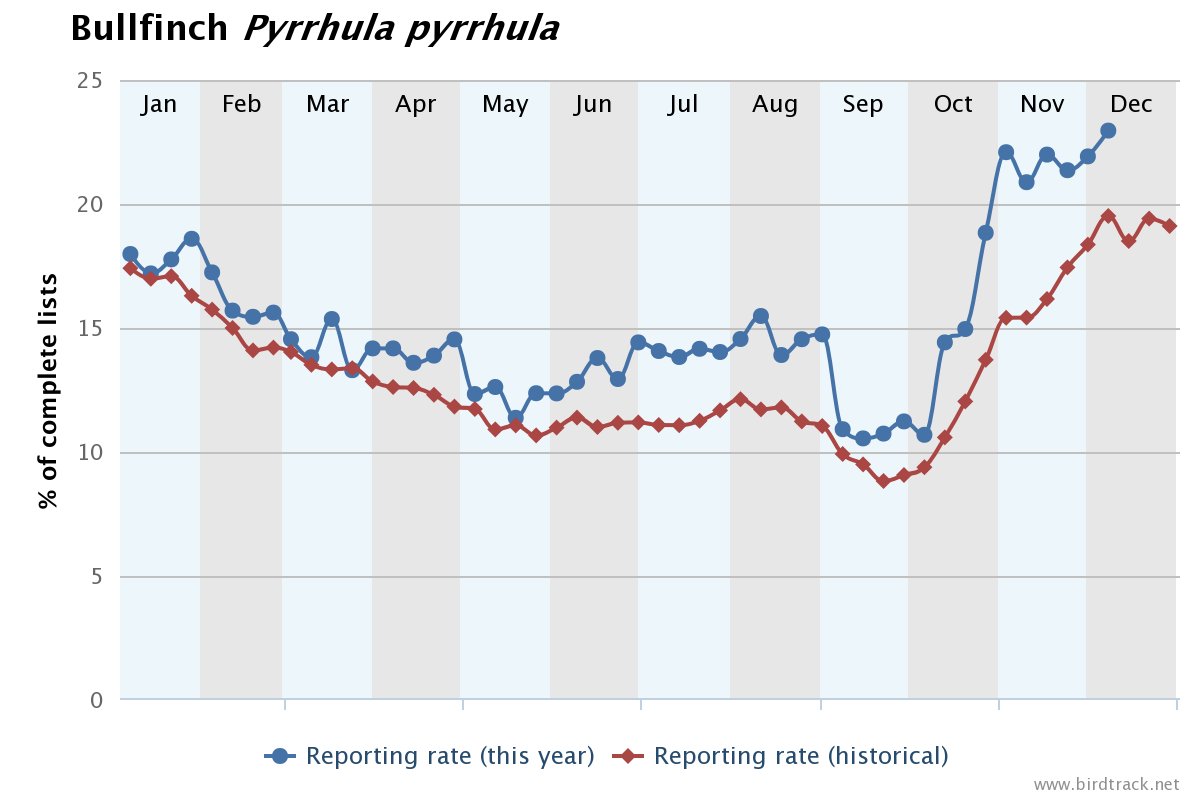
To conclude today I just wanted to refer back to a post from a few weeks ago. I speculated that 2017 had been a good year for bullfinch numbers. Well the BTO's BirdTrack survey has found hard data to support my own observations. This graph shows just how high the number of bullfinch sightings this year has been compared to usual 7. 


It's always nice to have my own observations made official! That's all for today but I'll hopefully be out and about lots over the festive season so there will be more soon!


4: RSPB: Greenshank
5: RSPB New Forest Local Group: Lymington-Keyhaven Nature Reserve
6: Fry, H. Fry, K and Harris, A (1999) Kingfishers, Bee-eaters and Rollers. London: Christopher Helm. pp. 219-221
7: Twitter: BTO

Sunday, 19 November 2017

November Notes

Let's begin this week with some of my local roe deer.


I was surprised to see how calm these deer appeared to be. They were only a few hundred metres away from a busy building site where groundwork was going on and this was only a few minutes after the loud canon that is fired for Remembrance day. Unlike other species of deer(1), the roe deer's rutting season has long since finished. They form small groups in the winter, as I saw(2). It is most common to see roe deer 'lying up' like this- they do this to ruminate (chew the cud) between feeding bouts.

Last week I visited Lymington-Keyhaven which is now starting to get busy with overwintering birds. I was also pleased to discover that the tide was out on my visit meaning there was a good opportunity to spot feeding waders.

There were several curlews feeding on the mud.


Last week I discussed how badly curlews are doing locally although you wouldn't know it at Lymington-Keyhaven. Every so often you could spot another large wader a little way out to shore and it would turn out to be a curlew. Unfortunately it's unlikely that many, if any, of these birds actually breed locally. Most of the UK's breeding curlew is in Scotland and the North of England(3) so it's likely these curlews are winter visitors, possibly only stopping off here on their way further south(4).


Here's a much smaller wader, a redshank.


Like curlews, redshank are generally found more in the North of the UK. Locally a few nest in the New Forest wetlands but most can be found at Lymington-Keyhaven- the Solent is an important area for them on the south coast(5).

Very close to the path I spotted this turnstone


The majority of waders have a duller plumage in the winter but turnstones have one of the more extreme changes, going from a bright chestnut brown to a dull grey(6). They get their name from the way they forage for food, often looking for invertebrates under stones. This individual didn't have to worry about stones though and was instead sifting it's way through the seaweed. 

I also saw a few species of duck at the reserve, including a few teal


Whilst some of the duck species that overwinter in the UK can be tricky to identify, teal are easy thanks to the green stripe on their head and the green wing feathers. The RSPB state that teal are resident in this part of the UK(7), though I've only ever seen them in the winter. Like the other birds mentioned today, teal are mainly found further north outside of winter. The UK is home to a significant percentage of the north-west European wintering population of these birds.

One final aquatic bird today and it's a canada goose that I see from time to time on my local fishing lake. It's easy to spot due to it's unusual plumage. 


It's difficult to know for certain what's going on here. The top of it's head should be fully black but here it looks like the black plumage hasn't formed properly. I think this goose is probably leucistic which means part of the plumage lacks the melanin pigment needed to produce the normal colour(8). This can cause problems for the bird as makes the feathers less strong and can result in members of the species not recognising it, though I think this individual will probably be OK on both counts. 

The other possibility is that this is a hybrid-goose, the result of a canada geese mating with a domestic goose or a different species. Geese breed with other species quite often and because all geese have 40 chromosomes they can do so successfully(9) which results in geese with unusual plumage. I would expect the hybrid to look more different from a canada goose than this individual does though.


1: 'Understand the British deer rut' 29/08/12 Discover Wildlife 
2: 'Roe Deer' The British Deer Society
3: RSPB: Curlew
4: 'Lymington and Keyhaven Marshes Local Nature Reserve' Hanstweb
5: 'Redshank' New Forest National Park Authority
6: RSPB: Turnstone
7: RSPB: Teal
8: 'Leucism and albinismBTO
9: 'What is this strange goose?' Askanatrualist.com 

Sunday, 15 October 2017

Lymington in October

Today I visited one of my favorite local nature reserves, Lymington-Keyhaven. With winter on the way it's starting to get busy with winter migrants.

Perhaps the easiest bird to see at the reserve, and indeed anywhere along the UK's coast, is the black-headed gull.


It's estimated that around two thirds of UK black-headed gulls in winter are actually migrants from mainland Europe. In winter these birds lose the chocolate-brown plumage which give them their name and just a brown smudge remains.

There were plenty of ducks on the reserve although most were females which look very similar and are difficult to identify from a distance on a murky day.


I suspect all or at least most of these ducks are wigeon- the bird in the top left is clearly a male wigeon. Wigeon do breed in the UK but only in Scotland and Northern England so these birds will be winter migrants from Iceland, Scandinavia or Russia.

Wigeons are dabbling ducks, like mallard, which means they feed by tipping headfirst into the water. The legs of dabbling ducks are more central than other types which means they can walk well on land and graze there.Diving ducks have to run across the water in order to gain momentum to take off whereas dabbling ducks are able to take flight straight from the water.


As you'd expect at this time of year there were plenty of waders around in the shallower water. I still find wader identification really tricky especially in winter when they tend to be similar light grey colours- it's highly possible some of my identifications are not right. 

There were many small waders which I think are probably dunlin- they are after all our most common small wader. 


Unlike other small waders, dunlin have slightly curved beaks which seems to be the main way to identify them. 

The largest waders of the day were the black-tailed godwits on the left of this photo.


It's interesting to see that these godwits still look fairly bright, not yet having faded to their full greyer winter plumage. I'm speculating that unlike other waders I saw, these are actually resident birds (I've certainly seen godwits at the reserve all year round) and therefore don't naturally fade as early. 

One more wader I saw was the greenshank


Greenshank aren't especially common in the UK with a few breeding in Northern Scotland and then a few overwintering here on the South coast. Like most waders they mostly eat small invertebrates but will catch small fish and amphibians. 

I also spotted several oystercatchers


It would be easy to assume that these birds eat oysters but unfortunately their name isn't really very accurate. They mainly eat cockles and mussels but also eat worms, especially if they are inland. Indeed, over the last fifty years more birds have started to breed away from the coast. 

It wasn't just aquatic birds I spotted on the reserve. You wouldn't necessarily expect to see goldfinches on a freshwater marsh but there they were amongst this red plant. 


Also taking advantage of this habitat were a few meadow pipits like the slightly blurry one I captured here. 


These birds are found all over the UK but mostly stay in the uplands in the breeding season. However, in winter they move South to the lowlands and becomes much commoner in the Southern half of the UK. 

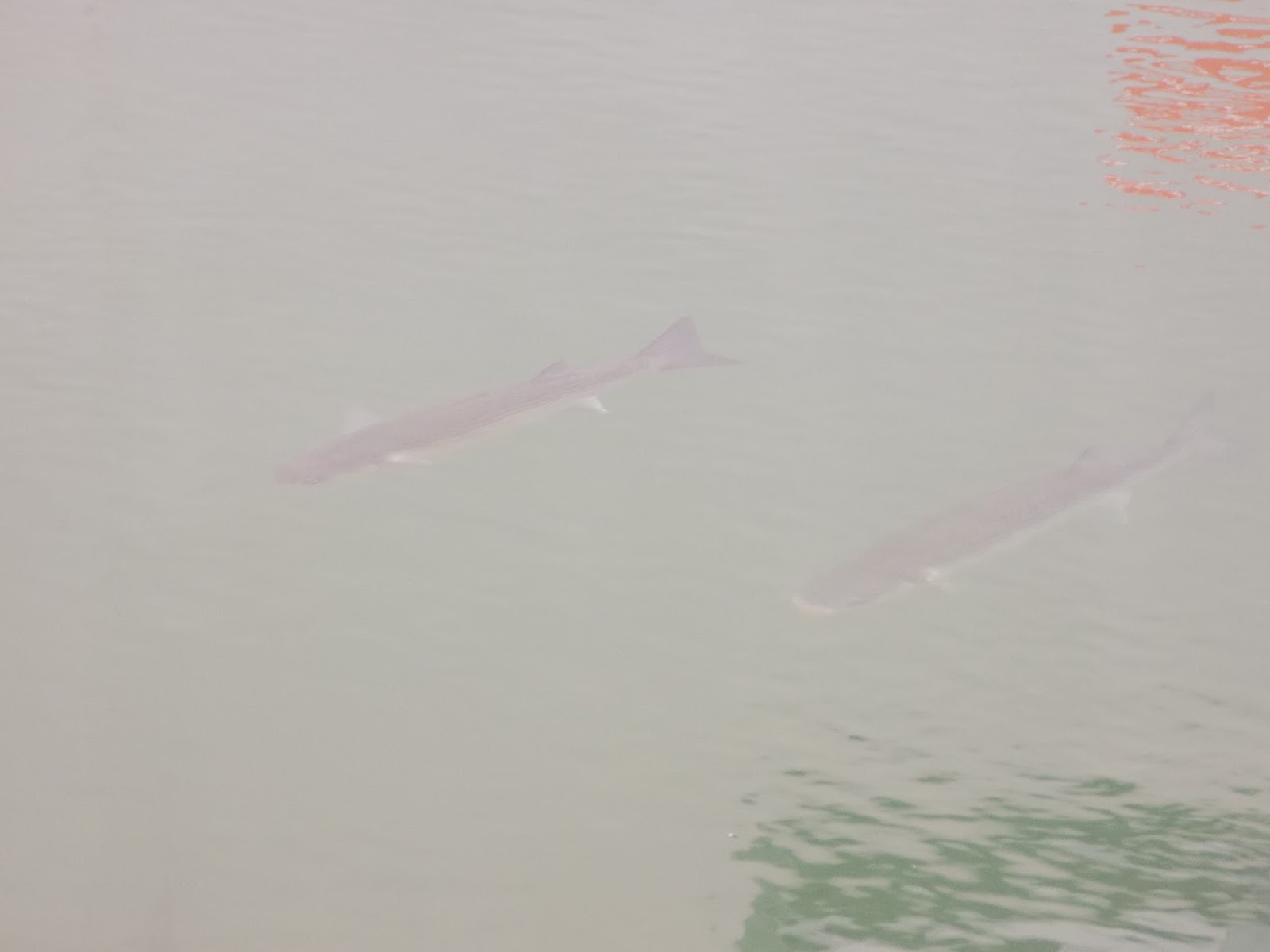
I was surprised on my way back to the town through the yacht marina that there were a lot of larger fish right near the shore. 


I wonder why these fish were on the land side of the yacht marina. No fishing is allowed in the marina so they are protected by that and the large amount of human activity and the shallow water means they are protected from most predators. 

I suspect, though I'm not sure, that these are thick-lipped mullet. There are four species of mullet in the UK- red mullet, which these look too dark to be, the golden grey mullet which isn't usually found at estuaries and harbours and the thick-lipped grey and thin-lipped grey mullet. These fish are often found in shallow waters and can even enter freshwater. 

That's all for now, see you again soon!

Saturday, 2 September 2017

Late Summer Sightings

We're into meteorological Autumn now- temperatures are beginning to dip and winter migrants are on their way.

It may be Autumn but there are still butterflies around. This week I've seen several species including numerous large whites. There seems to be more around now than there have been all summer.


I also managed to find a lovely moth recently in the most unlikely of places, a fenced alleyway. 


This is a willow beauty which is a night flying moth though the literature says that they can often be seen during the day on tree trunks. I suppose to a moth there's not much difference between a wooden fence and a tree trunk. 

It was still relatively quiet at Lymington-Keyhaven marshes when I visited last week but I did get a reasonable photo of a ringed plover


Many more of these birds will likely arrive in the coming weeks and months but this one probably stays in the UK all year round. These birds nest on open grounds on beaches so are obviously vulnerable to predators. They have a neat trick though. If a predator approaches the nest the adult will walk away from the nest, call to attract attention and feign a broken wing. When the predator heads towards it and therefore away from the nest the plover flies off.

I saw something I haven't seen before this week, a little egret sat on a nest.


OK, I have a confession to make: this is actually a captive bird in a walk through aviary at Marwell Zoo! It was still interesting to see nonetheless though a little odd to see such a familiar bird hanging out with ibis' and other exotic birds. 


Whilst at the zoo I did notice lots of wild house sparrows in the various animal enclosures. These were in with the meerkats. 


This shows how resourceful these birds are. The enclosures are actually ideal places for small birds as they are accessible and free from predators- as you know meerkats usually place an individual on sentry duty but at Marwell they don't feel the need to do this most of the time.

Marwell Zoo is near Winchester and somewhere I've been visiting all my life. Unlike some zoos it has large enclosures for it's animals and does fantastic work in education and breeding, both in the UK and in locations where some of it's animals come from. I recommend it if you're in the area. Here's a couple of meerkat photos I took on my visit:


Moving on, I've seen the Avon roe deer a few times this week. 


I recently learnt that roe deer became extinct in England during the 18th century. The Breeding Bird Survey (which also monitors mammals) has found the numbers of roe deer have increased by 64% since 1995. That's across the whole of the UK but in the South of England numbers haven't changed much since 2005. 

Managing deer populations is tricky. Too many deer mean land is overgrazed and in woodland this can cause a loss of habitat for birds and other animals. With no large predators to reduce numbers it's up to humans to try and manage numbers. 

The Avon kestrel has been regularly seen over the summer but they are a very tricky species to get good photos of. I did catch it taking a rare break from hovering as it rested in a small tree though even then it's not very clear.


It's likely this individual is still hunting from it's perch here- it's obviously requires much less energy than hovering. They can locate prey from a remarkable distance and are able to see and catch a beetle fifty metres from their perches!

That's all for today but hopefully I'll now slip back into the regular routine of new posts every Saturday. See you next week!