Friday, 2 March 2018

Chilly Creatures

It's been a cold few weeks here in Ringwood with temperatures rarely pushing positive figures. For our wildlife it's a huge challenge- low temperatures are always difficult and coming at the end of the winter means food is scarce. 

Last week I spotted lots of clumps of frog spawn in the New Forest, though all of it was frozen.


Frog spawn can survive freezing temperatures to some extent but it will struggle over a long period of low temperatures like we had. I suspect very few tadpoles will develop from the many clumps I spotted. 

At my workplace in Bournemouth this week I saw the car park fox for the first time in a while. 


I saw this vixen on several mornings this week in this spot. I can only imagine how difficult it must be keeping warm when you have to spend your entire time outside. This vixen was curled up in a pile of leaves in the sunshine which was probably about the warmest place she could be at 8:30AM. 

On Thursday the snow arrived. It was only a few centimetres but enough for the school I work at to be closed and some lovely views locally. 


The Avon deer didn't seem too bothered about the snow and were grazing in their usual field. 


There were lots of birds on the Avon itself- the water flows fairly fast there and that means it's relatively warm. I wouldn't like to paddle in it but it must have been better than sitting in the snow. The river was also the only source of food that was still available so it made sense for the birds to congregate there. 

Swan
Little Egret 

Goosander stretching its wings
                             

This teal was an exciting sighting as I've never seen one on my patch before. I assume it found its way to this stretch as a fairly warm and safe haven from the poor weather. 

The small birds mostly seemed to hunker down in trees. By doing this they were keep away from the worst of the wind and can take advantage of the natural heat of the trees. 

Chaffinch
 Some, like the starlings below, stuck together in groups where their combined heat helps them all to keep warm, a bit like penguins do.


On Thursday the snow became even thicker to the point we'd had more than I'd ever seen in my twenty odd years of living in Ringwood. Freezing rain then left a hard frozen surface to the snow overnight.


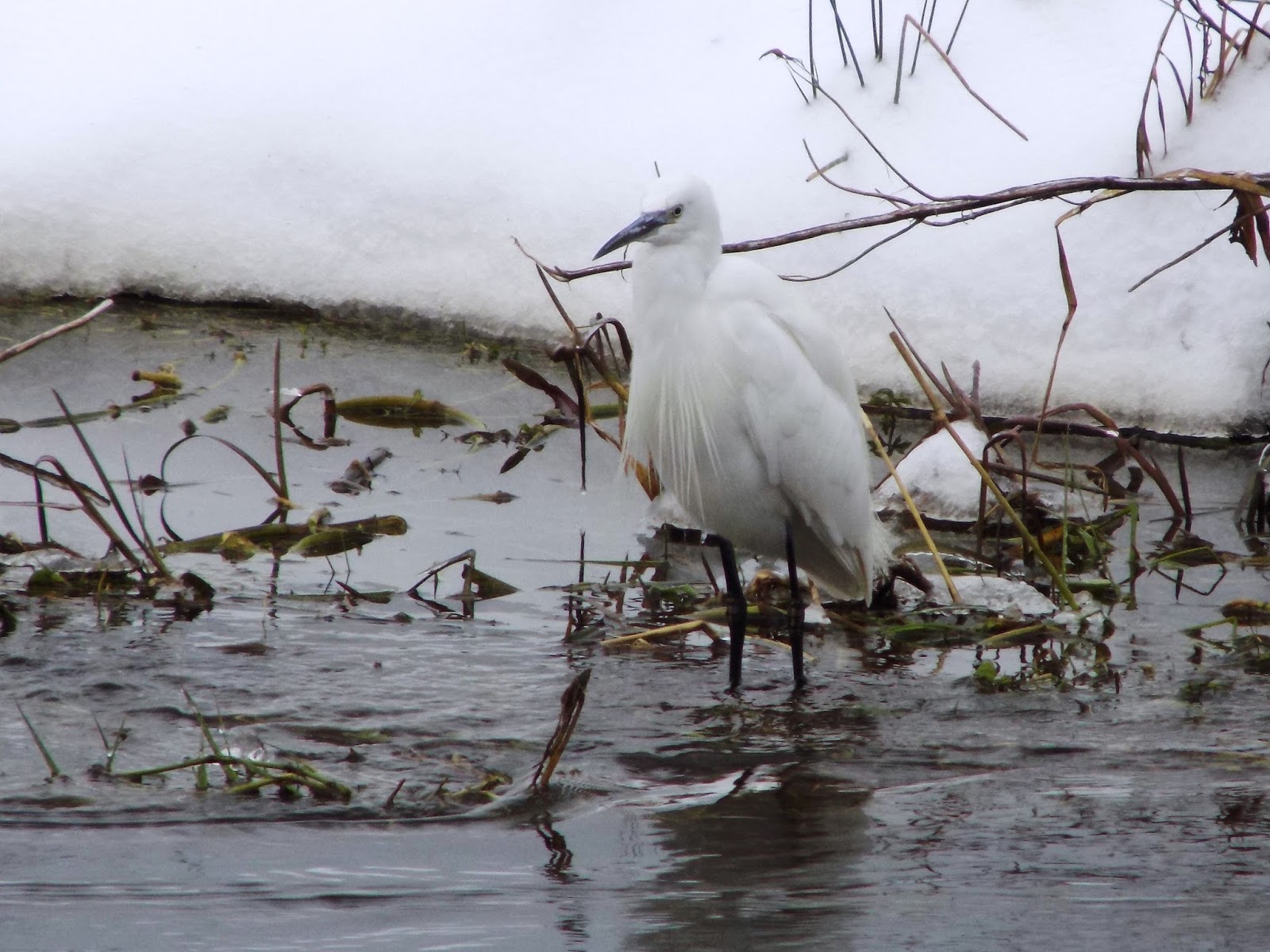
There were no sign of the deer today and I suspect they took shelter in one of the nearby wooded areas. The little egret meanwhile stubbornly carried on fishing as normal. 

I was also surprised to see a number of lapwings around this patch of the river, another species I've never seen on my patch before. They were all curled up trying to shelter from the elements. 


We should have seen the last of the snow, for now at least, but it will still be difficult for all these animals to survive the next few weeks. They must do everything they can to stay warm enough to survive as well as try to find food in difficult circumstances. It's likely that many won't be able to do this and populations of many species will be the lowest they've been for a number of years. 

I'll be back soon and do safe and warm in this cold weather!


Saturday, 17 February 2018

February Nature News

It's time for my monthly round-up of nature and environment news, from the local to national stories and beyond.

Boost for Bats

The Bat Conservation Trust has released its latest "State of UK's Bats" report and generally it's good news(1). Of the UK's 18 resident species most are growing in number or are at least stable. Both the greater and lesser horseshoe bats are doing particularly well.

It's important to remember though that these figures have to be considered in context- there were major declines in bat populations during the 20th century due to human activity. Roost and habitat loss, disruption of insect food supplies, increased urbanisation and the spread of artificial lighting all had an impact and though conservation projects are really helping, bat numbers have not yet reached historic numbers.

Horrible for Hedgehogs

Similarly, the "State of Britain's Hedgehogs 2018" report was recently published but this was far less positive(2). It shows that since 2000, hedgehogs have fallen by about 50%.

The main reason for this, in rural areas at least, is the rise of intensive farming practices. Many farmers have removed hedges and copses to create larger fields, meaning there are fewer safe places and nesting sites for hedgehogs. Large-scale pesticide use is also reducing the amount of invertebrates which hedgehogs eat. Clearly this is not a good combination.

It looks like things are a little better in urban areas with numbers having levelled off. If you have hedgehogs in your area you can leave out wet dog or cat food to support their nutritional needs and ensure there are holes in your fences so that they can move from garden to garden.

Salmon's Secret

We recently saw how genetic testing of grass snakes showed how different our population is. Now it's genetic testing of salmon that has revealed surprises.

Photo by Sam Billington of the Environment Agency, via BBC News
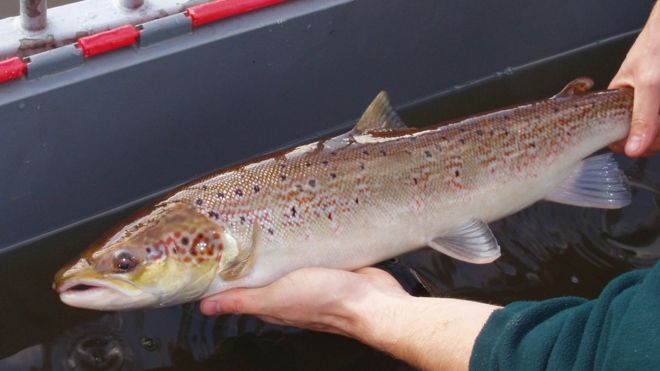
Scientists have discovered that salmon in chalk streams in Hampshire and Dorset (including the Piddle, Frome, Test, Itchen and Avon) appear to be genetically distinct from others and may be a sub-species of Atlantic Salmon(3). The latter two rivers are one I have spend a lot of time looking at so this is a really important local story.

Chalk streams flow through chalk hills and generally have clear, slow-flowing water and are more alkaline than other rivers.

River Itchen
The scientists are saying that the fish might need greater protection and is they are a separate subspecies they can't simply be replaced with salmon from elsewhere in Europe.

Sorry Starlings

Hampshire County Council have come under fire recently for cutting down some trees near Winchester Fire Station where thousands of starlings were roosting(4). There has been a large murmuration of starlings in the city this year and many people have come to see them.

Starling Murmuration in Winchester by Roy Venkatesh via Hampshire Chronicle
So why would the council do this? Well bird poo appears to be the answer- they were removed "due to the impact they were having on operation vehicles and the health and safety of staff".

This is a really awful story because the council made a quick fix which destroyed a roost site for the starling and an important habitat for countless other species. They didn't consult the public and appear to have made no effort to have come up with a less drastic solution. Some people are saying it doesn't matter and that the starlings have moved elsewhere. But if every little conflict with nature was dealt with in such a dramatic way habitat loss would be even more severe than it is already.

Plastic Purge Continues

Last month I talked about how many companies were pledging to reduce the use of plastic packaging and this has contin

Lots of plastic ends up in the oceans having broken down into microscopic pieces known as 'microplastics'. It's thought that these have a huge impact all the way along the food chain from tiny plankton to larger animals like rays, sharks and whales. Scientists are calling for more studies to find out what impact microplastic have on these animals(7) though they suspect that effects might include reduced nutritional uptake and damage to the digestive system. There's also the possibility that toxin exposure from plastic ingestion could affect growth and reproduction.

Of course, that's far from the only threat to our oceans. A study has shown that in 2017 the oceans were by far the hottest ever recorded (records began in the 1950s) (8). Warmer oceans cause bleaching of coral reefs and the melting of ice shelves. The oceans are so delicate and we desperately need to do more to look after them.

Osprey

Last summer eight osprey chicks were translocated to Poole Harbour in the hope of creating a population there. All eight have migrated south for the winter but as they are ringed one has been spotted(9).

LS7 was seen on a long sandy island called, appropriately, Ile des Oiseaux in Saloum Delta National Park in Senegal. It's a popular spot for ospreys with 20 to 30 individuals regularly spotted there. They can fish in the rich, shallow delta and rest up happily on the island.

Ospreys on Ile des Oiseaux by Jon Wright
LS7 is the only Poole Harbour chick to have been sighted so far- no-one knows how many of the other seven even survived migration. They expect to only see one or two birds returning to Poole Harbour this year but LS7 may well be one of them as it is found a perfect site to overwinter.

That's all for now but there will be more Nature News towards the end of March.


1: BBC: Most bat species 'recovering or stable'
2: BBC: Hedgehog numbers 'down by half', warn wildlife groups
3: BBC: Genetic secret of English salmon
4: Hampshire Chronicle: Fury as Winchester Fire Station trees- used by city's much-loved starlings- cut down due to bird poo
5: The Guardian: Asda joins wave of supermarkets pledging to cut plastic waste
6: BBC: Queen backs plan to cut plastic use on royal estates
7: BBC: Plastic pollution: Scientists plea on threat to ocean giants
8: The Guardian: In 2017, oceans were by far the hottest ever recorded
9: Roy Dennis: LS7 seen in Senegal

Monday, 12 February 2018

Brilliant Bramblings

The weather has continued to be poor lately, especially on Saturdays which are my main wildlife days. It's certainly been a wet winter!

I've seen the Avon roe deer a few times over the last few weeks, including the doe and fawns I first saw in July.

Roe Deer July 2017
Roe Deer February 2018
It's interesting to be able to see how they've developed in this time. Obviously they have grown a fair bit but you can see that they are still quite a bit smaller than their mother. It's also interesting to note how their coats have changed too. The fauns have lost their spots and all three have changed from their sandy summer colours to their darker winter colour. 

I've also saw one of the bucks at the weekend, potentially these fauns father and certainly a relation. 


Today I visited Blashford Lakes where I spent most of my visit in the Woodland Hide. It was really busy, both with visitors in the hide and birds on the feeders. There were plenty of the usual suspects such as chaffinches, goldfinches and blue tits. 


It was also a good day for siskins as there were a fair few visiting the feeders. 


At this time of year siskins start to appear more regularly in gardens and on feeders(1). They tend to resort to feeders when the natural seed stock has reduced and visit feeders more when the natural Sitka Spruce seed crop is low(2).

Every now and then most of the birds would suddenly fly back into the safety of the bushes, likely because there was a potential predator somewhere nearby. I did see one of these potential predators, a great spotted woodpecker. 


Like most woodpeckers this species mostly feeds on insects but over the winter has to supplement this with tree seeds(3). They would be unlikely to predate any of the birds present but in the spring they do feed on eggs and fledglings so they are wise to be wary of woodpeckers.It might be that they simply sense that this is a bigger bird and therefore a potential threat.

The highlight though were a few stunning bramblings. 


Bramblings are not resident in the UK and instead migrate from the forests of Northern Europe(4). As you can tell from their beaks, they are finches and like other finches mostly feed on seeds. Numbers vary depending on how much food is available but it appears to be a good year for them, as it is for bullfinches and hawfinches. 

I also got this very clear photo of a robin whilst walking round the reserve. 


Robins seem to be particularly abundant this winter. UK robins are generally non-migrantry but robins do spend the winter in the UK from Northern Europe so it's possible there is a larger influx this winter(5). At this time of year though robins are starting to secure their territories ahead of the breeding season so this could also explain why they are more visible at the moment. 

Whilst I didn't spend much time near the lakes themselves today I did spot a few interesting birds:

Green Sandpiper
Gadwall

Distant Kingfisher
I was also pleased to spot some fungi amongst the undergrowth, the stunning scarlet elf cap. 


Scarlet elf cap is a "saprotrophic" species. In simple terms, this means it digests decaying matter, usually wood in this case, and breaks the composite parts down- proteins into amino acids, lipids into fatty acids and glycerol and starch into simple disaccharides(6). These nutrients are passed through the mycelium, the fungi equivalent of roots, and help the fungus to grow. 

That's all for today but I'll be back on Saturday for my look at February's nature news.

2: Mckenzie, A.J., Petty, S.J., Toms, M.P. & Furness, R.W. (2007) 'Importance of Sitka Spruce Picea sitchensis seed and garden bird-feeders for Siskins Carduelis spinus and Coal Tits Periparus ater' Bird Study 53: pp. 236-247

4: BirdLife International (2012) IUCN Red List of Threatened Species, Version 2013.2. International Union for Conservation of Nature

6: Clegg, C.J and Mackean, D.G (2006) Advanced Biology: Principles and Applications (2nd ed). Hodder Publishing fig 14.16, pp.296

Sunday, 28 January 2018

The Friendly Frog

The last few weeks have been very wet here so I've found it quite a challenge to see much wildlife. Despite the poor weather it's clear that Spring is on the way with flowers starting to shoot out of the ground and snowdrops in bloom, as well as a few crocuses and even daffodils locally. The catkins on the hazel trees are starting to open up too.


For some time now I've been trying to get a photo of a goldcrest to share here but it's proven a challenging task. As well as being tiny, they dart around all over the place so finding one still enough to take a photo which doesn't end up blurry is very tricky. I was therefore very frustrated when one sat right in front of me last weekend when I was out in torrential rain without my camera. The best I could manage was this low-quality phone shot. 


Goldcrests are, along with the firecrest, the UK's smallest bird. They are usually around 9 centimetres long and weigh about 5.5 grams which is about the same as a twenty pence piece(1). Though many goldcrests stay in the UK all year round, many migrate from Scandinavia and mainland Europe to spend the winter here. Early ornithologists couldn't believe that such a tiny bird could migrate so far and thought they rode on the backs of short-eared owls or woodcocks, a great image but not true of course(2).

Goldcrest are almost entirely insectivores and spiders are an important part of their diet- that's likely what this individual was looking for when I saw it, looking for spaces in the old railway bridge where spiders might be lurking. 

For the first time I have an amphibian to share with you. I was just around the corner from my house when I spotted this common frog sitting in the middle of the pavement. 


Being right in the middle of the footpath in fading light was obviously a dangerous place for this frog to be so I gave it a gentle poke and it hopped safely into the undergrowth. 

Frogs hibernate in the winter so it's very early in the year to be seeing one. It is recorded that they start emerging from January though, as long as the night temperatures are higher than 5 degrees C(3). Given how early this one emerged it's likely it's a male- they tend to come out first and head towards a waterbody where they will wait for the females to arrive. Though not accessible for humans, this frog was actually only about fifteen metres away from the fishing lake so that is likely where it would be heading. 

When I write this blog I try my best to not write about the same species all the time so I usually have photos of things I don't end up sharing. As I'm really short on content and the month is drawing to a close I thought I'd share some of my previously unseen photos from January along with a few comments about some of them. 

First, here's a few of the usual suspects from a recent visit to Lymington-Keyhaven:

A group of dunlin
Dunlin are winter visitors to the UK and are usually seen in flocks like this. They feed in a 'sewing machine' action and here on the coast they eat molluscs, worms and crustaceans. 

Wigeon

Shelduck

Teal
My most regular walk is along a stretch of the River Avon where I always find plenty to take photos of. 

Mute Swan

Carrion Crow

I tend to regularly see crows all over the local area- though many birds are opportunist to some extent, crows are the more than any. Mostly I see them sitting in trees like this one where they can eat fruit or in fields where they find grain. I occasionally see them mobbing the local buzzards- they may be trying to steal prey from them- and a few weeks ago one was feeding on a dead fish which was lying on a bit of exposed gravel in the middle of the river. They will happily steal eggs and even hunt.

Grey Heron

These birds are surprisingly not instantly recognisable but they are female pheasants. Other than the shape and length of the tale they don't look very much like the males at all. I can only assume that the reason we see them far less than males is that they are much less noticeable and blend in well. Male pheasants happily breed with more than one female and then play no part in incubating or raising the chicks(4) so though they may be overlooked it's the females who are far more important to the species.


Song Thrush


That's all for today and fingers crossed the weather will improve other the next few weeks!


Sunday, 21 January 2018

January Nature News

This is the first of a regular feature- in the third week of each month I will discuss the latest wildlife and environment news- some of it may be local whilst other stories may be national or beyond.

Soggy Owl

Storm Eleanor battered the country earlier in the month and inevitably some wildlife got caught up in it. One such creature was this barn owl who was found in a roadside puddle on the A338(1).

Photo by Chris Pottinger via Bournemouth Echo
Many bird species use preen oil or take dust baths in order to make their feathers waterproof but barn owls can't do this due the comb-like fringed edges on their feathers(2). This adaptation is really useful in enabling them to hunt silently but does not help them in poor weather.

Fortunately, this owl was found by a passing tree surgeon and according to the local council would be looked after until it was well enough to be released. I can't find any information to confirm that this happened but it seems likely the owl would have been fine once it dried out.

Delightful Dolphins

Researchers from Plymouth University have studied records of dolphin sightings around the UK and have discovered a pod of bottlenose dolphins that live off the shores of the South West of England(3). The group consists of 28 individuals which spend most of their time near St. Ives Bay and Mount's Bay in Cornwall but also venture along the coast of Devon and Dorset.

Picture by Daniel Murphy via BBC News
Bottlenose dolphin pods normally consist of around 15 individuals but can range from one pair to over 100(4). They search for prey using sonar and will eat a range of fish as well as eels, squid and shrimps. They are the apex predator in shallow waters which shows how good the ecosystem along this part of the coast must be.

There are currently two other known bottlenose dolphin pods around the UK- one near Cardigan in Wales and the other near Moray Firth in Scotland. I would never have thought that there would be bottlenose dolphins living so close to home!

Fox-Hunting Foiled

I was delighted when Prime Minister Theresa May dropped the planned vote on repealing the fox-hunting ban(5). It had been part of the Conservatives election manifesto but May said:

"My own view has not changed but as prime minister, my job isn't just about what I think about something, it's actually about looking at what the view of the country is. I think there was a clear message about that and that's why I say there won't be a vote on fox-hunting during this parliament."

It's disconcerting that the tory government want to repeal the ban but at least they appear to be listening to the views of the public.

The government has also recently published it's 25-year plan for the environment. Whilst I haven't looked at it in any detail it appears that the plan is full of important promises but there's no evidence that they will be made law or that they will actually be kept.

The Plastic Purge

The public are becoming more aware of the problems of plastic for the environment, especially thanks to the brilliant Blue Planet II and both the government and large companies are now trying to do something about it.

The government has now banned products from being manufactured contained microbeads and later in the year products with microbeads will no longer be able to be sold in England(6). Microbeads are solid plastic particles less than 1 milimetre in their largest dimension. They are often used in personal care products and toothpastes.

Because they are so small these microbeads go straight through the sewage system and end up in the water where they are eaten by fish who mistake them for plankton. Like all plastics, they are toxic and have an adverse effect when consumed. They also end up building up along the food chain so anything along the food chain can be harmed by them- including humans.

The government also want to introduce a 'latte levy', a 25p charge on disposable coffee cups similar to the 5p charge on plastic bags(7). These coffee cups can't be recycled and the UK throws away 2.5 billion of them every year. The stupid thing is that it's so easy to buy a reusable coffee cup which is not only far superior to the disposable ones but will also save you money in the long term with most chains offering a discount if you bring your own cup.

Meanwhile, retail companies are acting on growing public pressure and are seeking to phase out the use of plastics. Supermarket Iceland have pledged to remove all plastics on their own-brand products within five years(8). It's hugely popular with the public too as 80% of a sizeable survey for Iceland supported the move.

Other companies too are reducing their plastic use. Waitrose already had a strong plan to reduce the use of plastic and this month have announced they are pledging to stop the use of the difficult to recycle black plastic trays(9). Costa Coffee are ditching plastic straws(10) as are restaurant chain Wagamama(11).

It's all a welcome step in the right direction. More needs to be done though to make these sorts of change law rather than something the companies choose to do and it needs to spread to as many other countries as possible. These sorts of changes are vital if we are to protect our fragile planet and all it's inhabitants.